


Discount for America, revisited.
Part 1: what is a “discounter?”
This is the first of a multi part series.
There are not many markets where Aldi, and/or Lidl (or often, both) are not able to co exist and take market share from their larger peers. Denmark did see Aldi retreat after 10 years and 400m euros lost, selling out to REMA1000, ironically a discounter in their own right and strong across the Nordics.
Denmark is a market that is heavily discount oriented already. Salling Group (Dansk Supermarked as was) own Netto, which is a huge discounter in Denmark and the surrounding territories, and the Danish Coop alongside REMA also operate discount stores. That made it just too difficult for Aldi Denmark to take root.
Aldi Denmark was owned by Aldi Nord, the less glamorous sibling of Aldi Sud (who we have in the UK, USA and Australia amongst others), which did make the shopping experience a little more Eastern European than their glam sibling.
Whilst Denmark shows one side of things, it’s the exception, not the rule. Both Aldi and Lidl are formidable across the territories in which they operate. Both are privately owned so happy to play the long game, running at near zero margins.
But it showed that whilst the discounters are formidable competition, they are not unbeatable. Indeed, we have seen a noted slowdown in share growth on Numerator (Kantar as was) in recent months for Aldi UK, whereas Lidl have kept growing.
Both retailers are aided by Numerator not splitting out new space, so retailers can “win” Numerator quite easily by opening lots of new space. If the local panel customer goes to an Aldi because there’s a new one in town, then of course that adds to the hypothesised Aldi market share number. Numerator do balance this effect out, but there is little doubt that in a market where new (larger) space has been very rare from the larger retailers, discounters opening stores at a rate of knots did have an effect.
The UK, for example, has seen a complete about turn in food retailing circles since the Great Recession in 2008 saw EDLP (every day low price) discounters become customer champions and achieve rapid growth every year until relatively recently.
But also, to be fair to Kantar, their figures did reflect the mood of the nation. Aldi and Lidl were (and are) very popular and have a loyal following, with customers delighting in the low prices and cheaper products (brand equivalent) in store.
They were not new to the market. Aldi were first established in the UK in 1990, Lidl followed four years later, and they sat alongside the likes of Kwik Save (RIP) with a similar model, albeit not as refined or globally exposed.
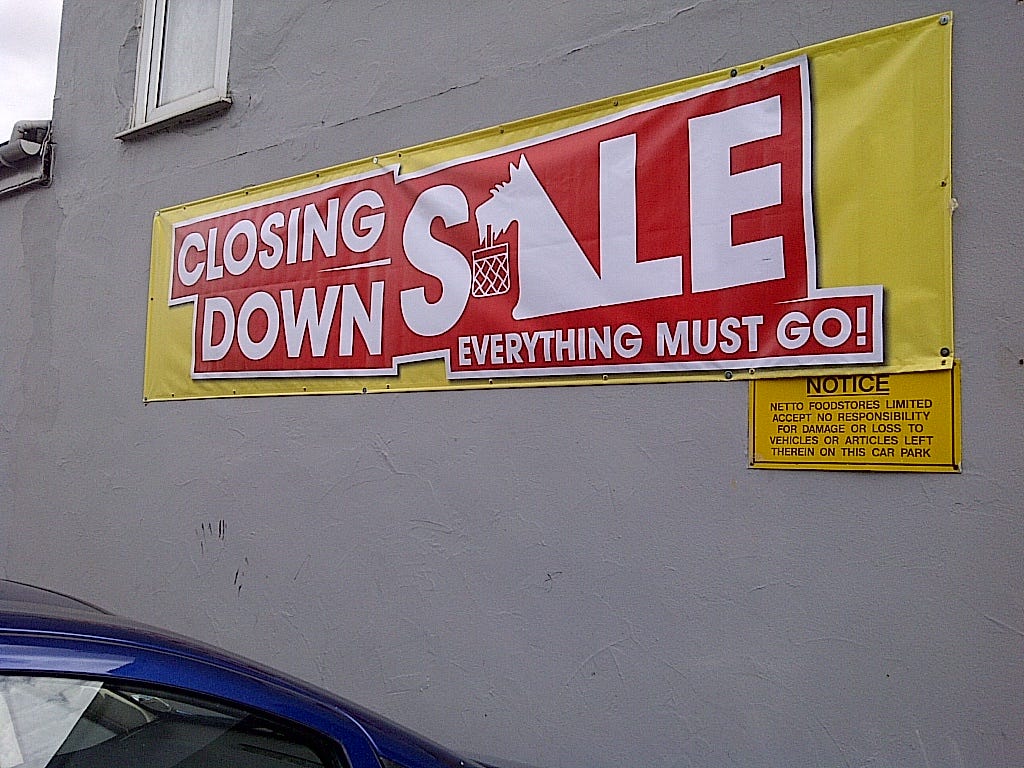
Netto, owned by Dansk, was more common for us Northerners, where the crime of taking a Netto bag to school was punishable by near death in the playground and school hall, such was their poor reputation for quality.
Aldi and Lidl bobbed along unremarkably in the 90s and noughties despite the growth (and growth) of Tesco, the Morrisons takeover of Safeway and the demise of both Somerfield and Kwik Save, alongside woes at the Co-operative who acquired Somerfield.
Both Aldi and Lidl continued to open stores, very quiet stores(!), near their larger competitors and operate an unremarkable business where often someone had to finish filling the Beer aisle before serving you at a checkout.
Then once the associate served you (one of the four customers in store) they signed off their checkout and went off to complete their shop floor task. All part of the brutal efficiency that Aldi and Lidl aim for, of course, but to ordinary customers it was a place you went to save money. You shopped there because you had to.
Not a place to shop because you wanted to.
Which is a dangerous place to be for any business, let alone a retail one.
However, larger retailers were almost dismissive of the threat and arguably put more focus on how to combat Walmart taking over Asda, and what would happen with Morrisons when they became a national force, than they did about the discounters taking any form of market share from them.
Why revisit this now?
I first wrote Discount for America in 2019, when Lidl had landed on the US east coast, Aldi was already well dug in, and the question was whether the model that had upended the UK, Ireland and Europe could do the same across the Atlantic.
Seven years on, the answer is more interesting than a yes or a no, and it deserves a proper look.
Since I wrote this in 2019 - Aldi US continues to expand rapidly, following their playbook of how they operate in almost every other territory they have operated in. Rapid expansion, privately owned, happy to run at near zero margin.
They’re aiming for nearly 2,800 stores by the end of this year (2026) as it converts 220 acquired Southeastern Grocers (Winn-Dixie and Harveys) stores (after selling a tranche back to a new company) alongside their ongoing new space programme.
In contrast, Lidl US has taken a much more restrained approach, operating around 200 stores on the East Coast after scaling back initial aggressive projections, trimming corporate overhead, and pivoting to a modest, high-density regional re-plan under new leadership. The challenge for Lidl appeared to be that they picked the wrong areas to both open, and expand in to.
The Eastern seaboard with Virginia as their HQ is an expensive area for real estate, plus the competition in the States is concentrated both locally, and nationally too.
Despite growth, online, COVID and AI. The discounters have barely changed their model much. Sure there are tweaks, more branded range in the central aisles, but the core mechanics continue apace.
So before we get into how Aldi and Lidl differ, how they range, how they operate and what the larger retailers did about it, it is worth being precise about what a discounter is.
Most people think they know.
Most people are describing a supermarket with lower prices, which is not the same thing at all.
Just like Rugby League, and Rugby Union whilst being the same, are in fact played differently.
Discounters are in the food retail game, but their rules of operation are vastly different to those of a Tesco, or a Walmart for example.
What a discounter actually is
A food discounter offers limited choice in exchange for lower prices, and it achieves this by keeping choice to an absolute minimum.
This is the whole model.
Everything else is a consequence of it.
A typical Aldi or Lidl trades from around 8,000 to 15,000 square feet (their largest stores) with somewhere between 2,000 / 2,500 core lines. The number differs due to central spaced branded products on a rotating special buys, but also due to the way they feature choice within an SKU.
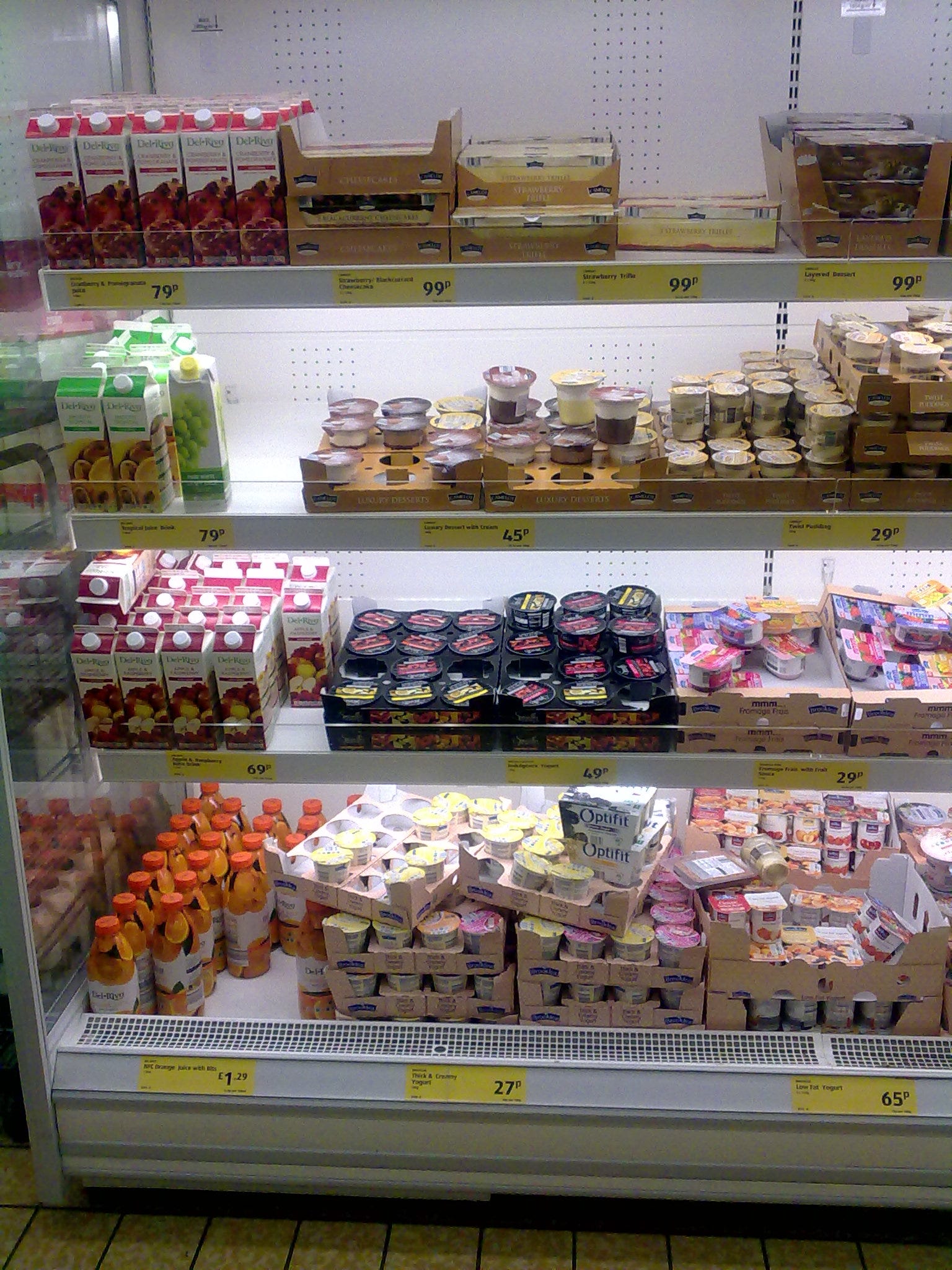
They will sell one dessert style yoghurt = 1 SKU but that tray will feature 3 flavours, each sold under the same SKU. So 1 product, becomes 3. Albeit sold on a single tray (3 facings).
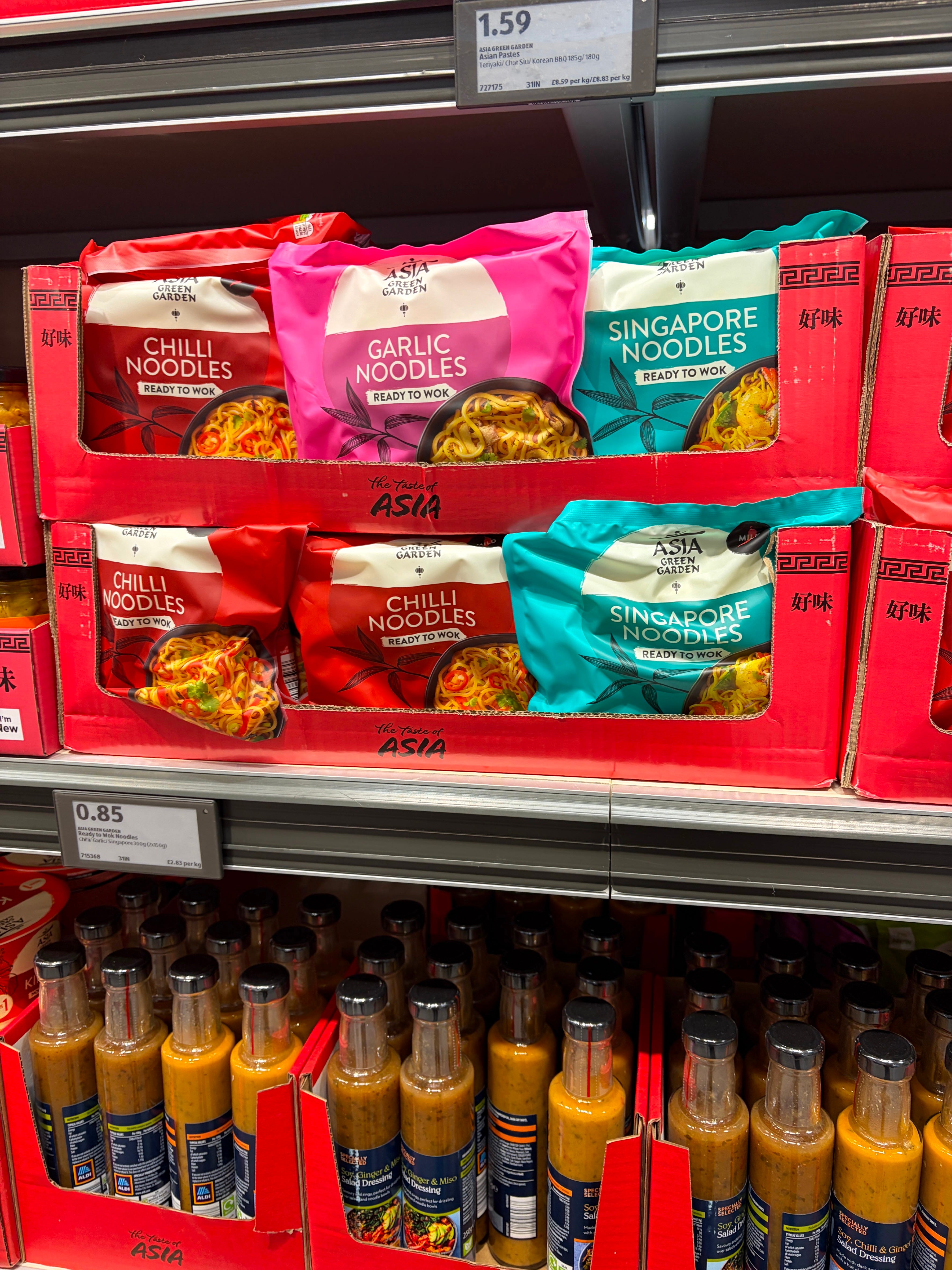
There are numerous examples of this, which is why the CMA (UK’s Competition Market Authority) recently ruled that Aldi and Lidl probably sell nearer to 4,000 SKU’s when this way of operating is taken in to account.
In comparison. A large Tesco carries north of 25,000+ products.
The discounter does not range multiple tiers within a category as a matter of course; there is typically one tier, the mid tier, pitched against the leading brand on both packaging and quality.
A value tier and a premium tier do exist in the UK now, but they exist where a gap needs plugging, not as a default across the store, either to stretch the margin (Premium) or to close a value gap (value tier).
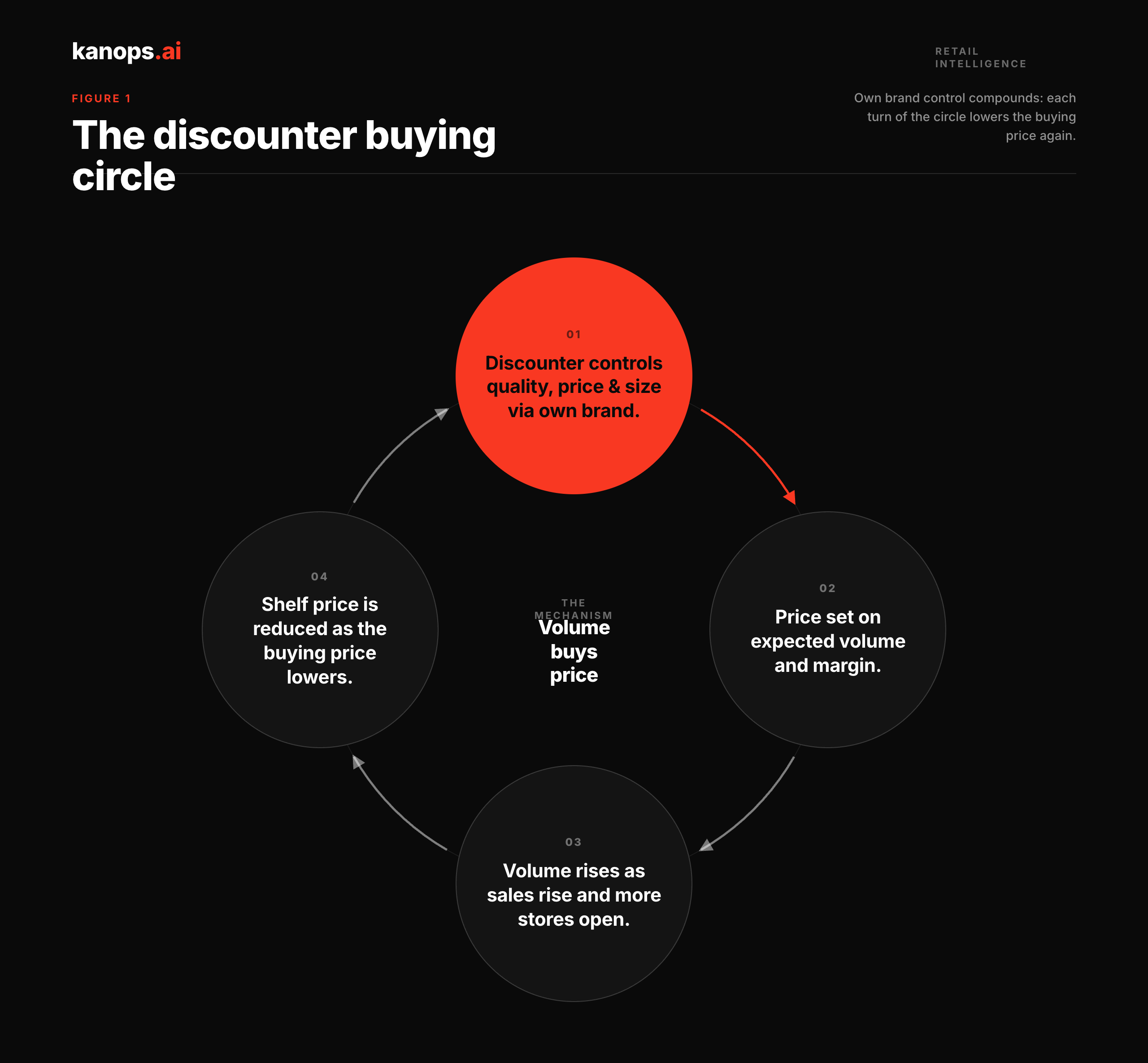
The basic discount model runs like this:
A limited, predominantly own label range across Fresh, Ambient, Household and Beers, Wines and Spirits.
Low priced, high quality products under their own label.
Few brands, if any at the start but more as the chain grows volumes.
Limited ranging means high efficiency and low cost: the right shelf space and less replenishment in day.
Volume grows through more customers, more sites and more sales.
Better buying prices through greater volume give greater margin, lower prices, or both.
It is a virtuous circle and it is worth drawing out, because it explains why discounters behave the way they do on range, on new products and on space.
Own label is the lock (and key) for customers.
The benefit of an own label centric model is loyalty, without the frills of a loyalty card (although Lidl do have a loyalty card now, Aldi, do not).
If the customer prefers a Lidl brand, the customer must visit Lidl, because that product is not stocked anywhere else. Same for Aldi. Whilst leading brands are more of a part of the mix these days in Aldi and Lidl, they are a sideshow to the main event.
Aldi and Lidl treat their own brands exactly as a brand owner would: strong packaging identity, shippers and signage in the brand livery, seasonal variants in Laundry and Sun Care, and a marketing budget spent comparing itself to the leading brand and advertising any award win, imaginable.
The brand equivalent claim is not a side note; it is the reason the customer accepts the reduced choice as a marker of a business focused on value.
Reduced choice, deliberately
Within a category, the discounter will typically range one type of Croissant and one type of Tortilla Wrap.
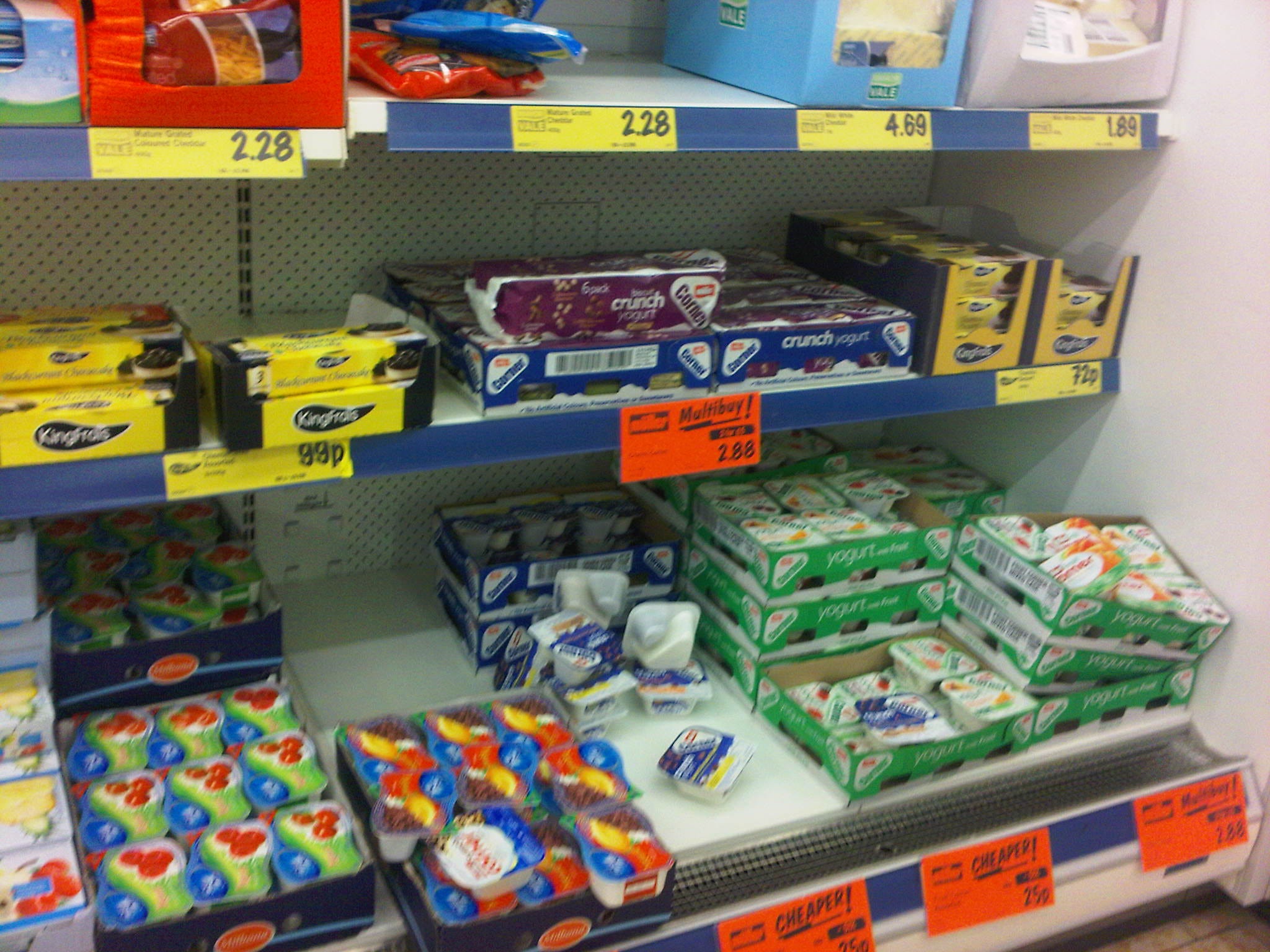
Where they need to offer variety without breaking the model, they use a mixed case: one SKU of Coffee on the system, three variants in the box. Or Yoghurts, as above.
The customer rummages.
This is also why categories that are built on choice, such as Free From, Home Baking and Organics, remain a too difficult for the model.
There is not enough room on the shelf, and not enough lines on the system, to make the range compelling.
To add them, despite demand, would lead to the model breaking and the efficiencies around lower headcount and quicker, one touch replenishment would not be achievable.
Non food is the treasure hunt
The centre of the store carries a rotating set of non food events, changing once or twice a week, whilst this used to a main event, it has slowed in recent years with the wider slowdown in non-food amidst a push to online.
Aldi did offer special buys (Non-food) and Wines online, but this ceased last year due to costs and falling customer demand..
It’s not uncommon to see Gardening, Horse Riding, Soccer, a Polish food week, a DIY week in one aisle, both Aldi and Lidl are far tighter on the non-food cycles these days and they manage this well.
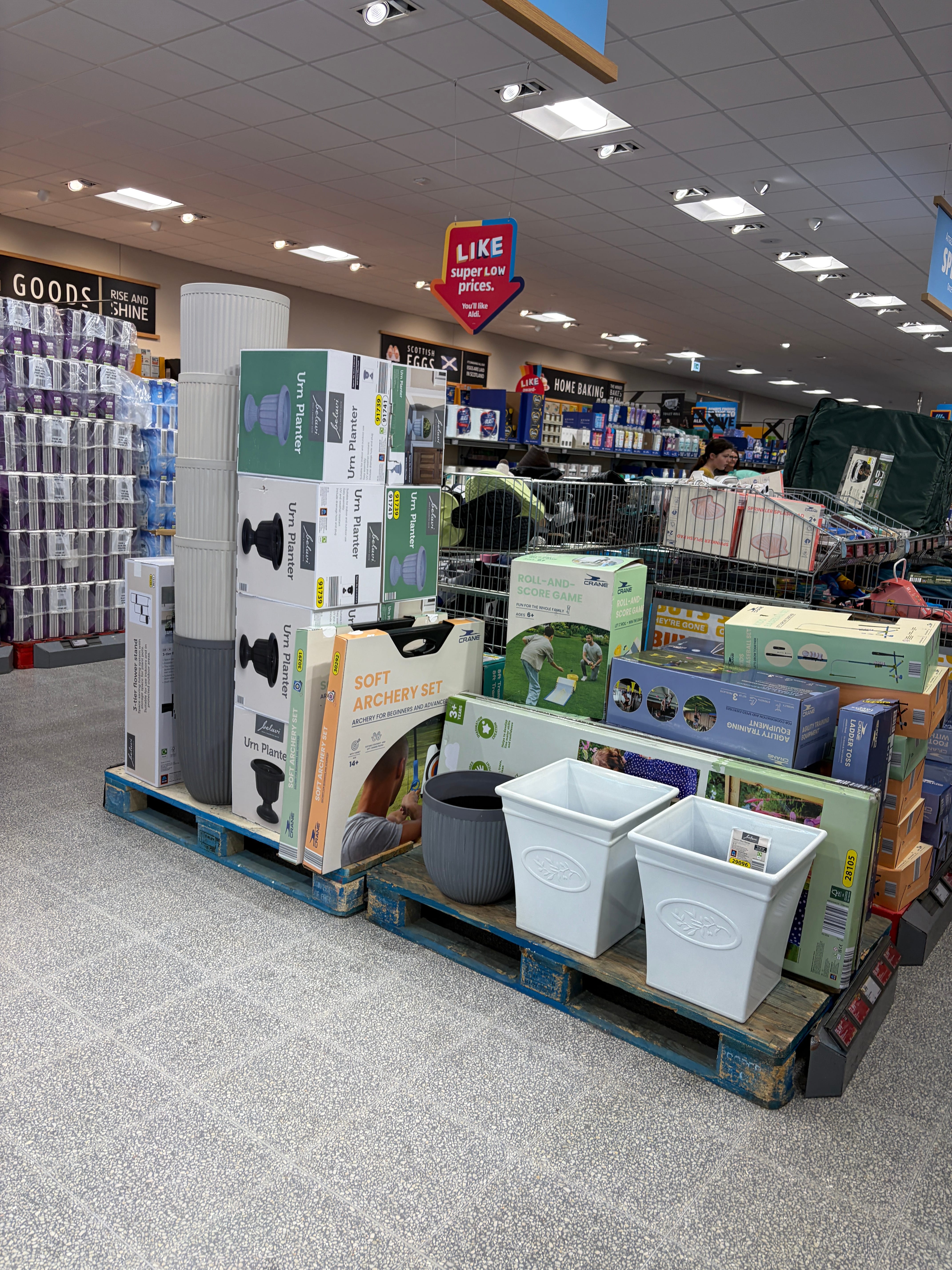
The stock is limited to keep clearance down, the leaflet drives interest, and the customer comes for the chainsaw and leaves with a basket of food is diminished these days, due to their wider popularity, he still exists.
This is the one part of the discounter offer that behaves like a hi/lo retailer, and it is deliberately fenced off from the core range.
Notably in recent times, both Aldi and Lidl have added shelving and baskets for their core food space to add rotating brands, some linked to events like the World Cup, others there to drive additional basket spend in store.
No frills, and price stability as a feature
There are no confusing promotional mechanics around complex multibuys or spend £10 in this category for £1 off. Nothing like that.
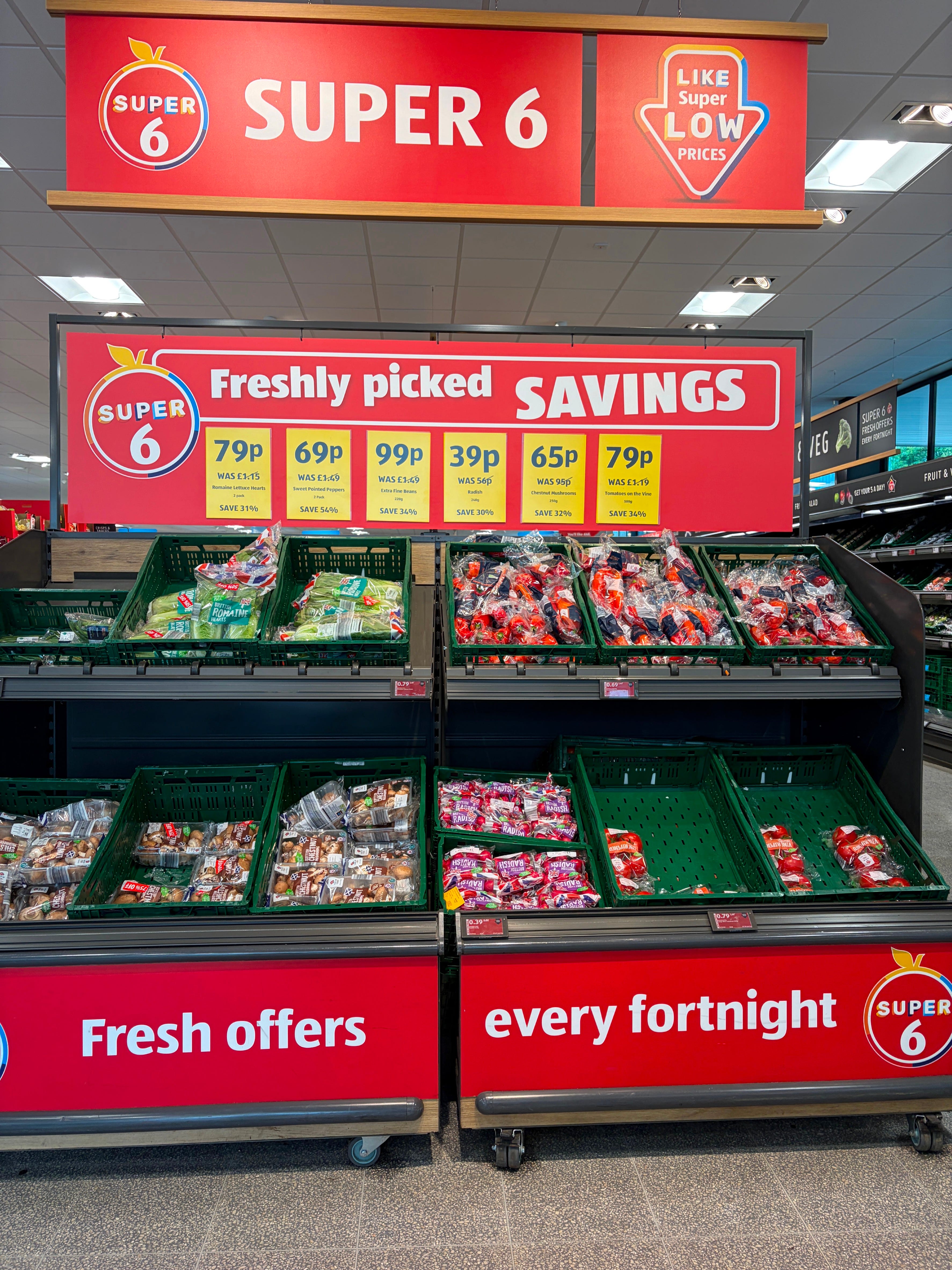
Lidl are arguably growing closer to that, with their loyalty card and rotating deals, multibuys and their gamification of their app. However, both discounters still operate on a pure EDLP (every day low price) philosophy with no high ticket items or confusing price tiers.
Lidl do run some multibuys and they both run periodic Produce deals that have been successfully copied elsewhere, but the underlying model is focused on simplicity, tight assortments and everyday low price.
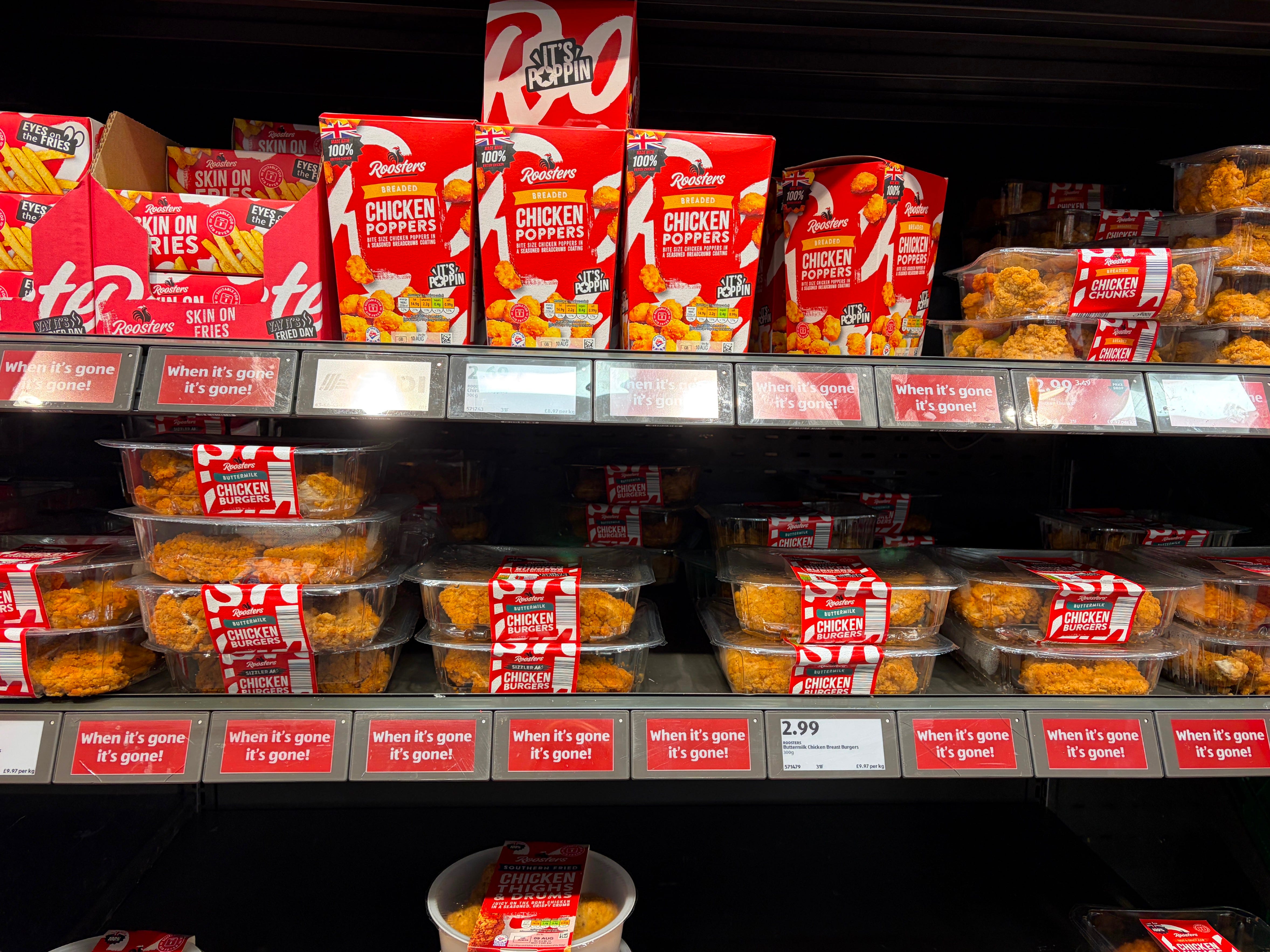
That gives the customer something the larger supermarkets could not offer through the boom years of discount: price security. One week you could go to Tesco and the same shop, 4-6 weeks later could vary by £30 due to promotional reliance.
A limited range at a stable price means the customer can predict the basket cost before leaving the house, knowing that they’ll not have to compromise.
Smaller store, faster shop
Because the range is small and so is the store, and a customer can be in and out in twenty to thirty minutes.
Not a full shop in the same way that a larger superstore would offer, but a fast one.
Against a 100,000 square foot out of town superstore, that is a real competitive advantage, and it is the one that made discounters attractive to time poor, affluent customers as much as to price sensitive ones.
They have even encroached in to convenience territory due to their location selection in suburban areas and offering long opening hours (closing at 10pm) whilst offering plentiful free car parking too.
Why a customer shops with Aldi, or Lidl
Ask the question in the 1990s and the answer was: because they had to.
Ask it after 2009 and the answer changed.
Austerity, wage freezes and the collapse in consumer credit made the discounter mainstream, and they grew in popularity, quickly.
Once the middle classes arrived, the newspapers followed with “star buy” Wines and British sourced Meat at a fraction of the established price elsewhere.
Shopping at Aldi and Lidl became a badge of honour rather than a secret. I got this for cheaper here than Tesco / Sainsbury’s etc.
Particularly strong was their Fish, Meat and Produce. Own label dominated categories that offered no deviation. A cucumber is a cucumber, after all. But Aldi and Lidl were significantly cheaper and offered no puzzling multibuys, just a low price.
and it was a low price they held true.
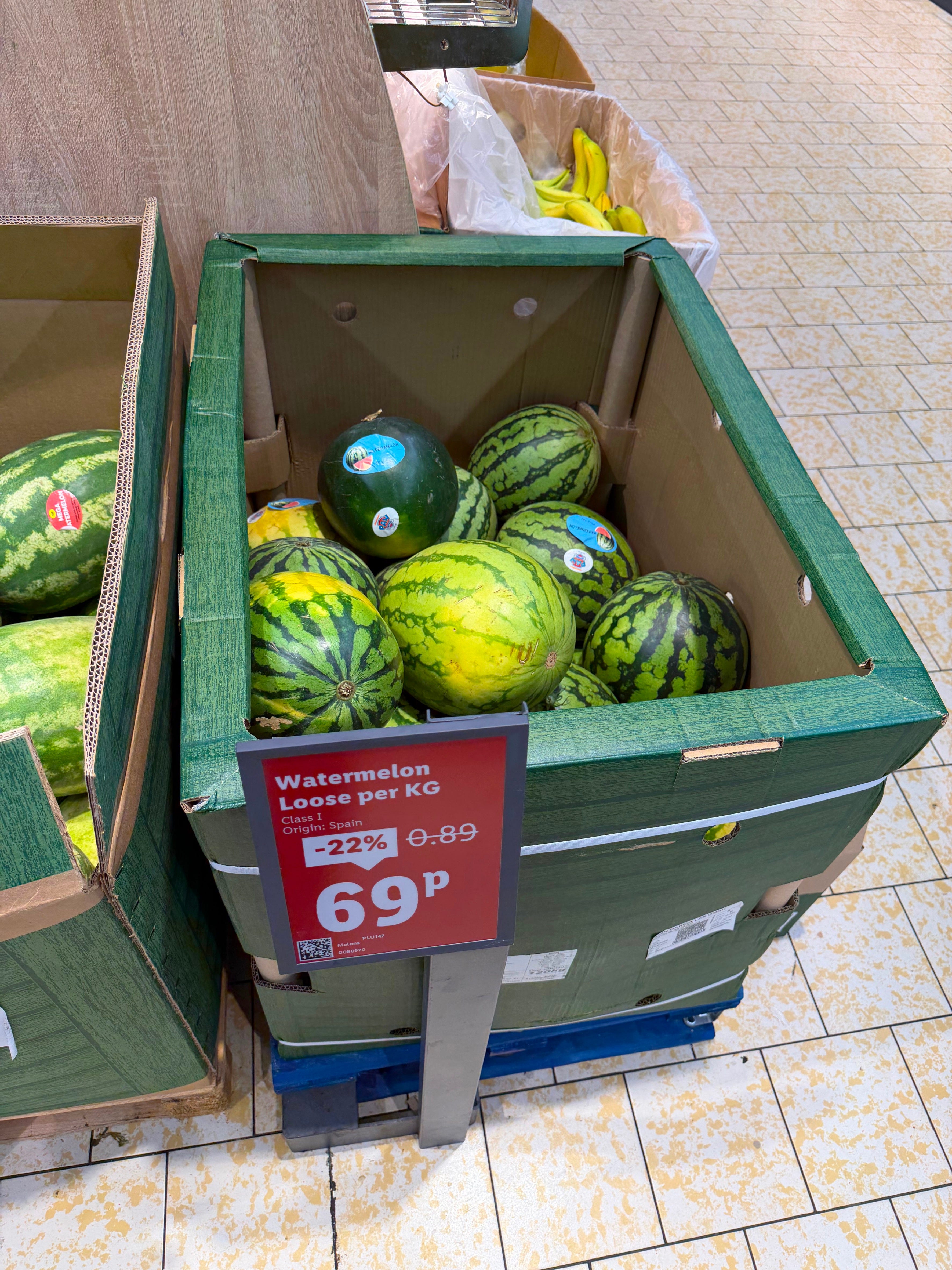
Strip out the economic cycle and the discount offer to any customer, in any demographic, comes down to a short list:
Price. Truly low, and stable.
Simplicity. 1,500 to 2,000 lines (plus rotating lines) versus 25,000.
Time. Twenty minutes versus an hour or more.
Provenance. Lower, stable price without lower welfare or sourcing standards.
Newness. A different middle aisle every week.
The larger retailers eventually understood this.
What they did about it, and whether it worked, is the subject of the final part of this series and it’s going to be a real ride through the ages.
What’s coming
Part 2 looks at how Aldi and Lidl differ, because “the discounters” is a lazy phrase and the two businesses execute the same model in noticeably different ways.
From there we work through own label tiers, Fresh, the centre of the store, the treasure hunt mentality and the front end, before closing on the UK reaction, the US reality and the laws of the discounter as they stand in 2026.
Strap in, it’s a tale for the ages.