

The “discounters” is in fact, a lazy phrase.
“Discounters”is used across the industry as if Aldi and Lidl were one organisation with two logos, and it hides more than it reveals and does the Germans a disservice.
Indeed “the big four” in UK parlance refers to Tesco, Sainsbury’s, Asda and Morrisons but recently Aldi have overtaken Morrisons, Lidl as well, pushing Morrisons in to 6th place. With Aldi at one point looking as though they were in touching distance of Asda in 3rd.
Despite the two businesses operating the same operating model, limited range, own label led, everyday low price, small box, but they execute it in noticeably different ways, and those differences matter if you are competing with them, supplying them, or trying to work out which one wins if they open in your area.
Just as importantly, they are not even structured the same way as legal entities, there is a lot more to the model than low cost groceries.
Who are Lidl?
Lidl are owned and operated by the Schwarz Group, founded by Dieter Schwarz, who bought the rights to the name “Lidl” when setting up the company in the 1970s. Schwarz Markt would translate as “black market,” which would not have worked as a brand……..(!)
Alongside Lidl, Schwarz Group also operate Kaufland, a chain of large format stores across Germany and Central Europe, which also landed in Australia before withdrawing due to local competition, quite a fierce story there.
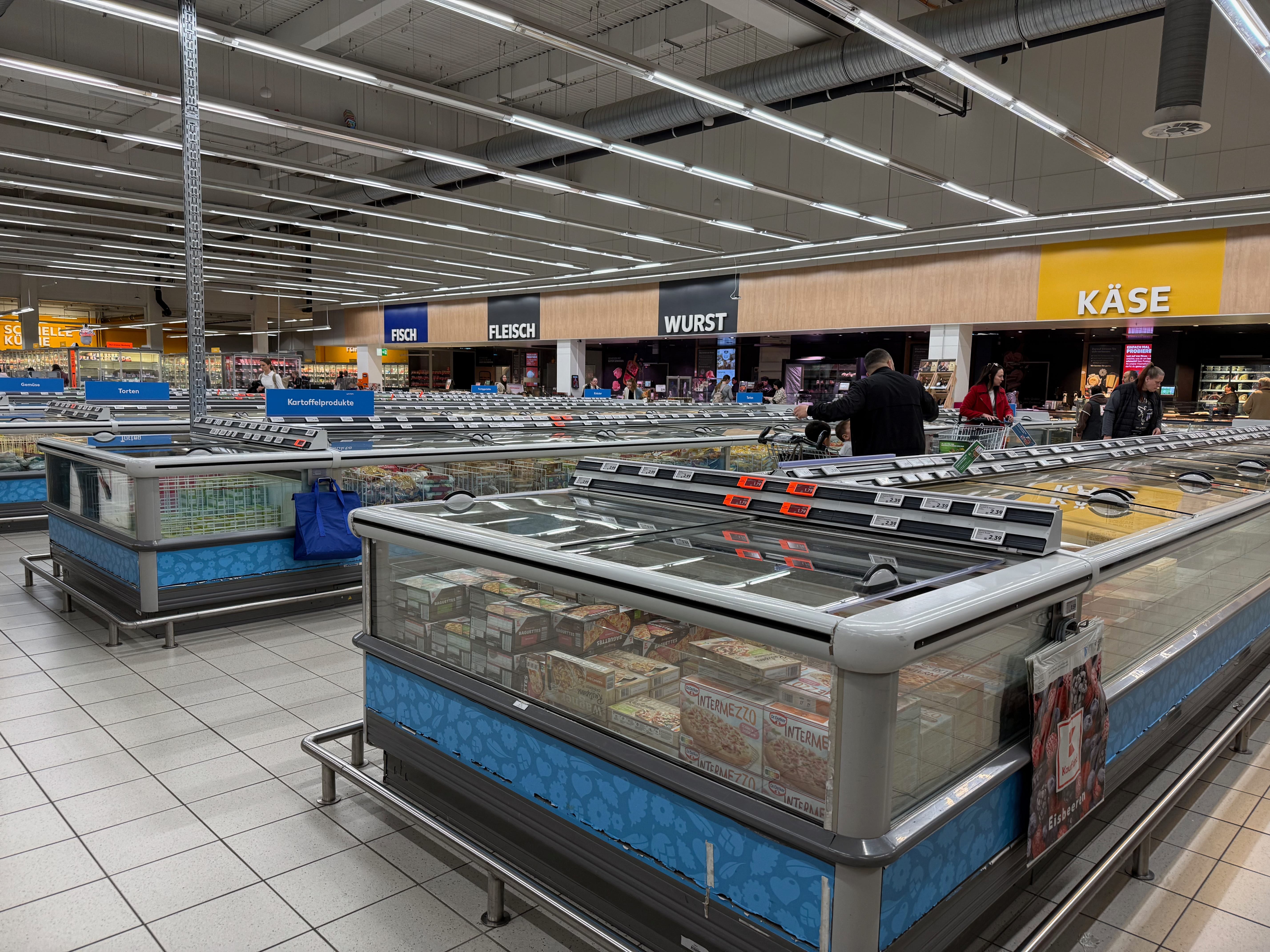
Since their inception, Lidl have expanded well beyond their German base and are present across most of Europe, into the UK and Ireland, and of course the United States.
Crucially, however, Aldi are not structured in the same way.
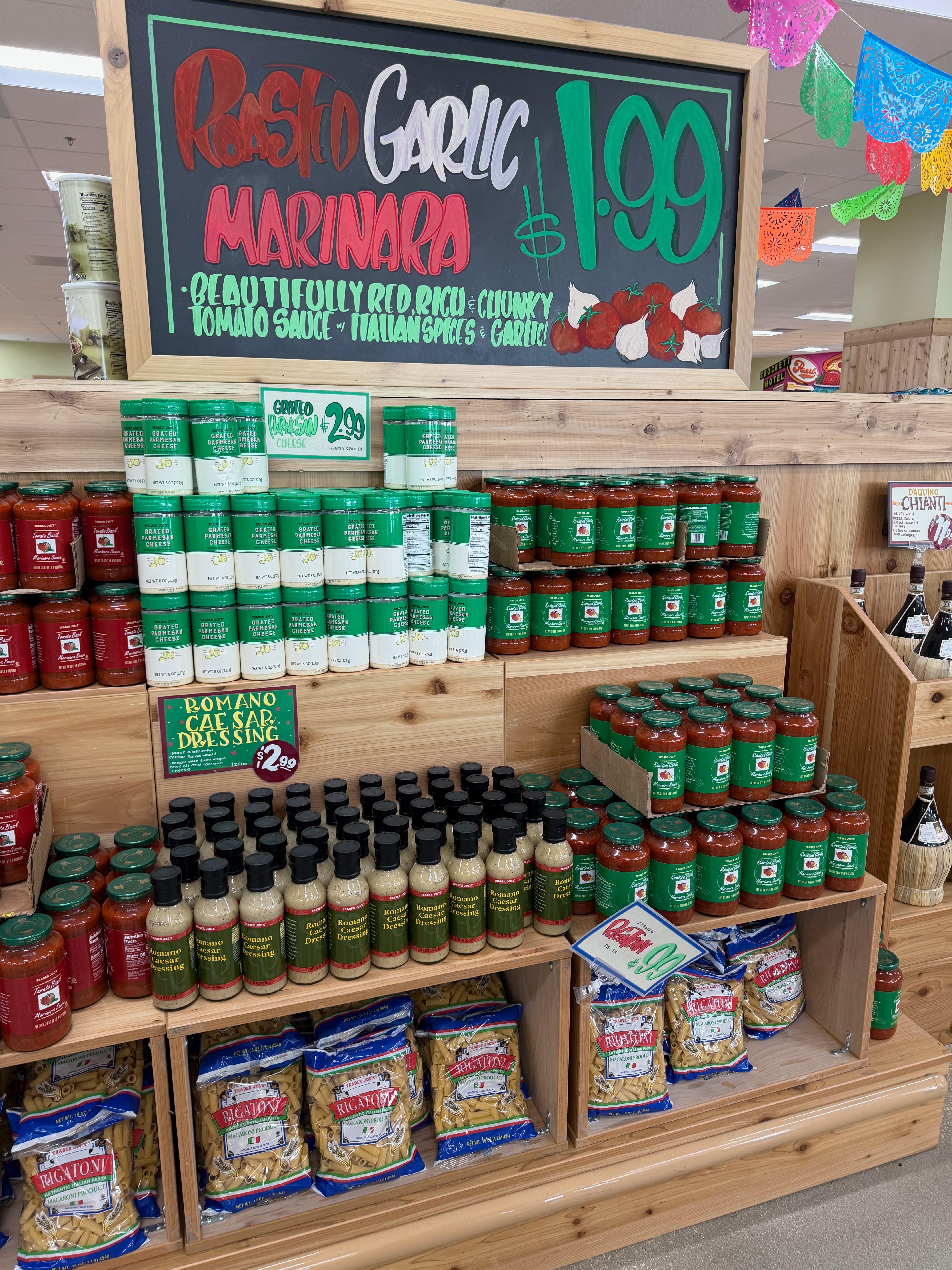
Aldi split into two separate companies decades ago (Nord, who do own Trader Joe’s and cover Central Europe and Scandinavia with barren stores and a low key atmosphere and Sud, who run the UK, Australia, the US and Southern Europe, an altogether more modern operation), Lidl remain one organisation. In full.
One buying operation, one scale.
That matters for many reasons. Lidl truly benefit from their size across so many markets in a way that the two Aldis, each buying separately, do not quite match. There is talk of Aldi merging some elements of their operation to further drive scale, but it seems that Aldi Sud are more content with centralising a lot of their buying and back office operations in Central Europe.
But there remains an opportunity if the two were ever to mesh together to further drive efficiencies.
The key thing to know is that both Aldi and Lidl are privately owned. They will happily run at a loss for years to establish a foothold in at territory, circling zero margin as they build momentum and their flywheel then starts to take hold.
They are in it for the long game, rarely do they exit territories (it does happen, as we highlighted in the first note..) but rarely.
Because of their long term view!
That is a key reason why the UK retailers struggled to get a grip of them, in Ireland as well post the financial crash as customers adjusted to a world without cheap credit and one that was uncertain, to say the least.
In the UK, quarter to quarter PLC owned retailers alongside privately owned Asda (Walmart, albeit starting to focus on the US) were caught cold by the long term approach from both Aldi and Lidl.
A perfect storm then with the financial crash in 2008 leading to Aldi and Lidl becoming very mainstream, very quickly. Thus their tried and tested discount machine starts to really move.
When entering a new territory, both Aldi and Lidl adopt what I would call a chameleon model: the same core range, store design and operating disciplines, with signage, sourcing and advertising adapted for local relevance.
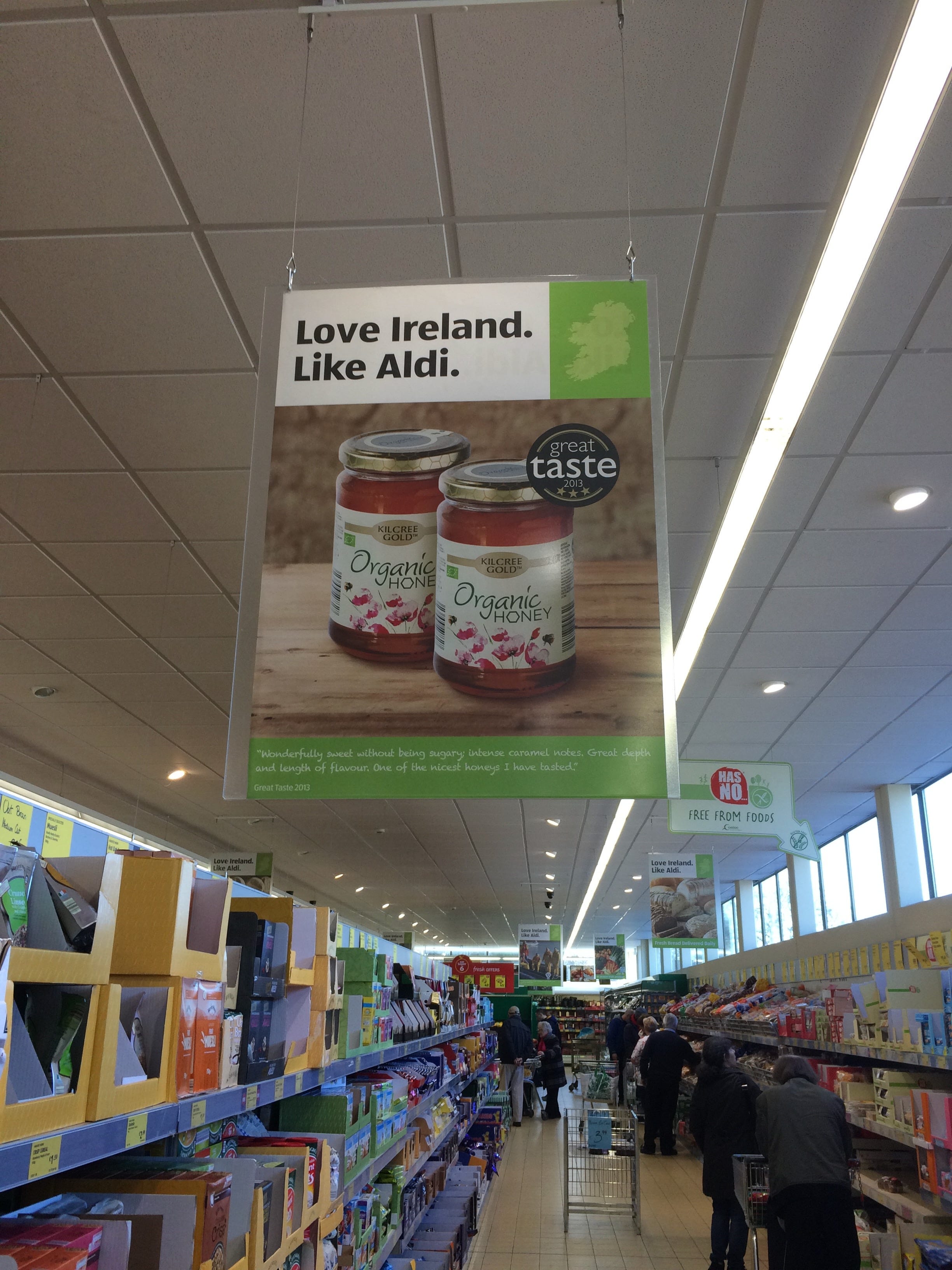
Local Meat, local Produce, big on farming agreements and being a good vendor (pictures of farmers in store) and membership of the national trade bodies, and the food accreditation marks that reassure a customer bewildered by a store full of brands they have never heard of.
Award winners help, and these are advertised slavishly across the store and across product too. Surprise and delight customers!
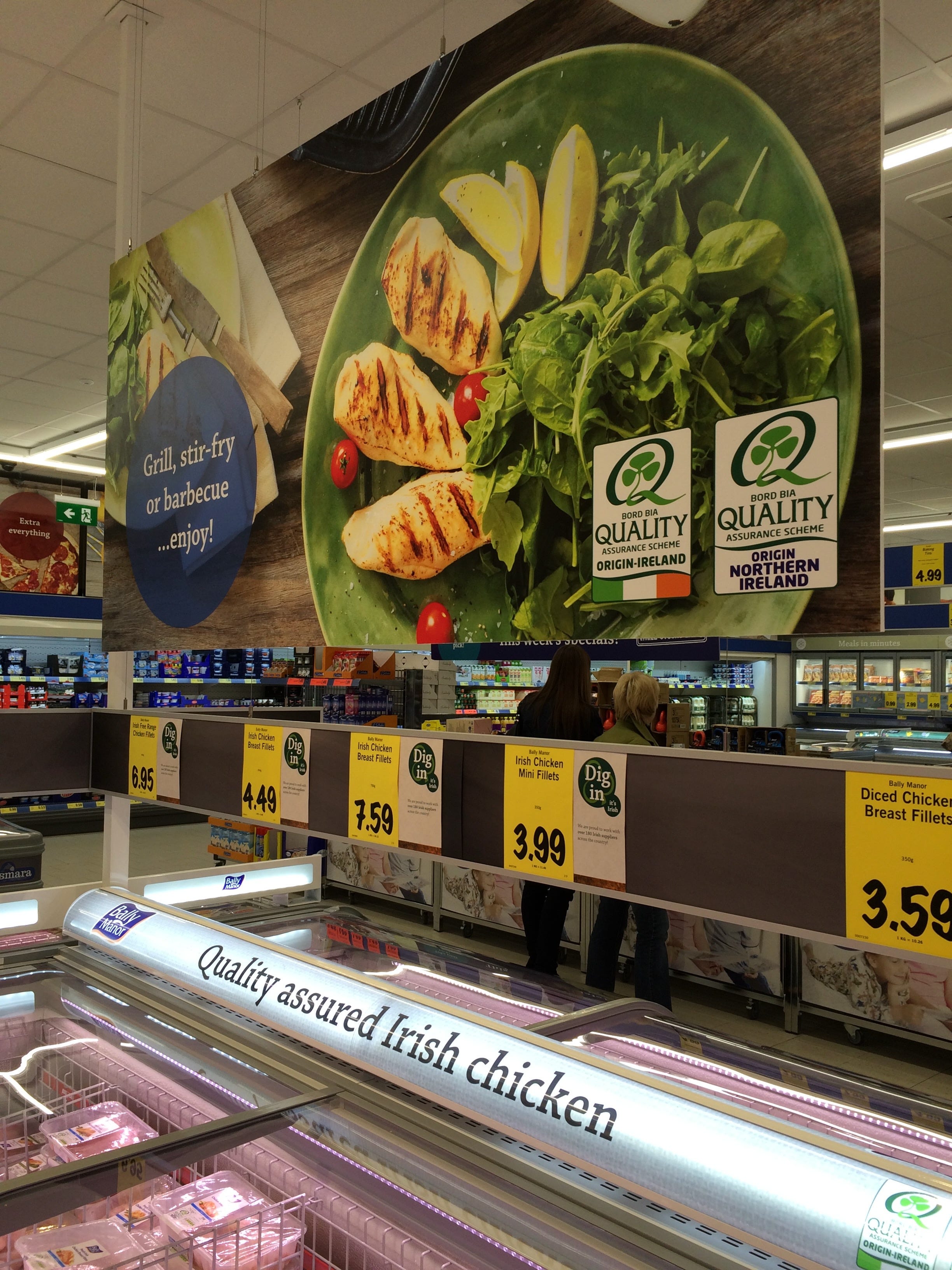
Red Tractor in the UK, Bord Bia in Ireland, USDA in the States. Plus sponsorship or support of the German retailer (remember this!) local team, so Team GB (Olympics) are sponsored by Aldi, with Lidl sponsoring the Scotland football team.
Same animal, different colours. But the same strategy, over and over and over. Simple, repeatable. Neutralise the German heritage, almost convince customers you’re a local grocer with supply stories, local sourcing, long term agreements, job creation, investment of £/$X billion over x years.
The differences that show on the shop floor (but similarities are obvious outside the store….)
When you walk stores - as I do, aisle by aisle, both retailers are roughly the same in approach. There are more differences now, than before but they both aim for a standard “box” from a planning perspective and site requirements.
Preferably with car parking (ample is needed) and a dock leveller for the wagon and the same template for wagons to be offloaded (often, the wagon comes overnight and the driver offloads at the store and drives away).
A small(ish) warehouse as they aim for cross docking and then one touch replenishment across the piece.
Initially (and still now) both Aldi and Lidl located stores near larger competitors to feed off the secondary footfall (and save on location planning! Just build nearby!) but the land requirements were still the same. They don’t mind smaller retail parks, or sharing with others.
They have become more flexible over time, especially as land is harder to source in the affluent areas where they wish to open. However any move from their core model does impact their operating model (lower store size means fewer facings & more in day replen).
But it’s a trade off.
Indeed some of their stores became so busy, Aldi (particularly) would then open up a store nearby, not necessarily one that was on the radar so to speak, but rather to take the pressure off a nearby existing store….. Which says a lot about their growth in those days.
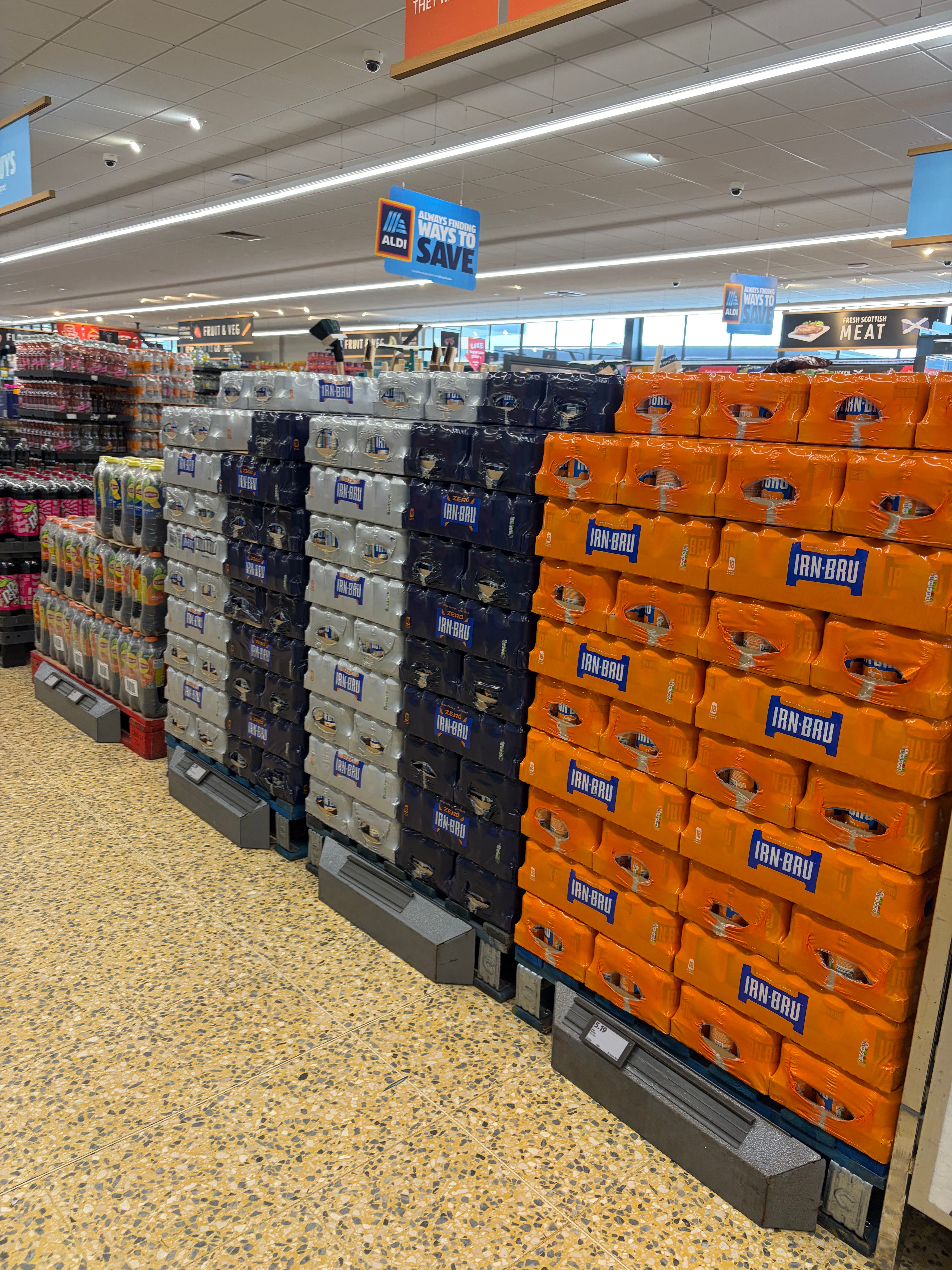
Their choice of “box” can mean they swerve the requirement to commission local surveys around trade impact, traffic and the like as they fall below the statutory requirement to do so. However, some local authorities insist on this, anyway.
Whilst the externals for both are roughly the same - building larger stores now than they were at the start. Remember that chameleon approach. They adapt!
Lidl when faced with one of their older stores (like Aldi) always prefer to move to a better location nearby however where this isn’t possible, they simply flatten the store and build a newer one in its place.
Whilst they share many similarities around location planning, site acquisition and preferences of location (note that there has been attempts at Aldi Local and Lidl seem to flexible to open as the basement tenant of a University halls of residence eg) those are the exception, rather than the rule.
The in store execution differs in five ways that a customer would notice, and competitors should be aware of too…..
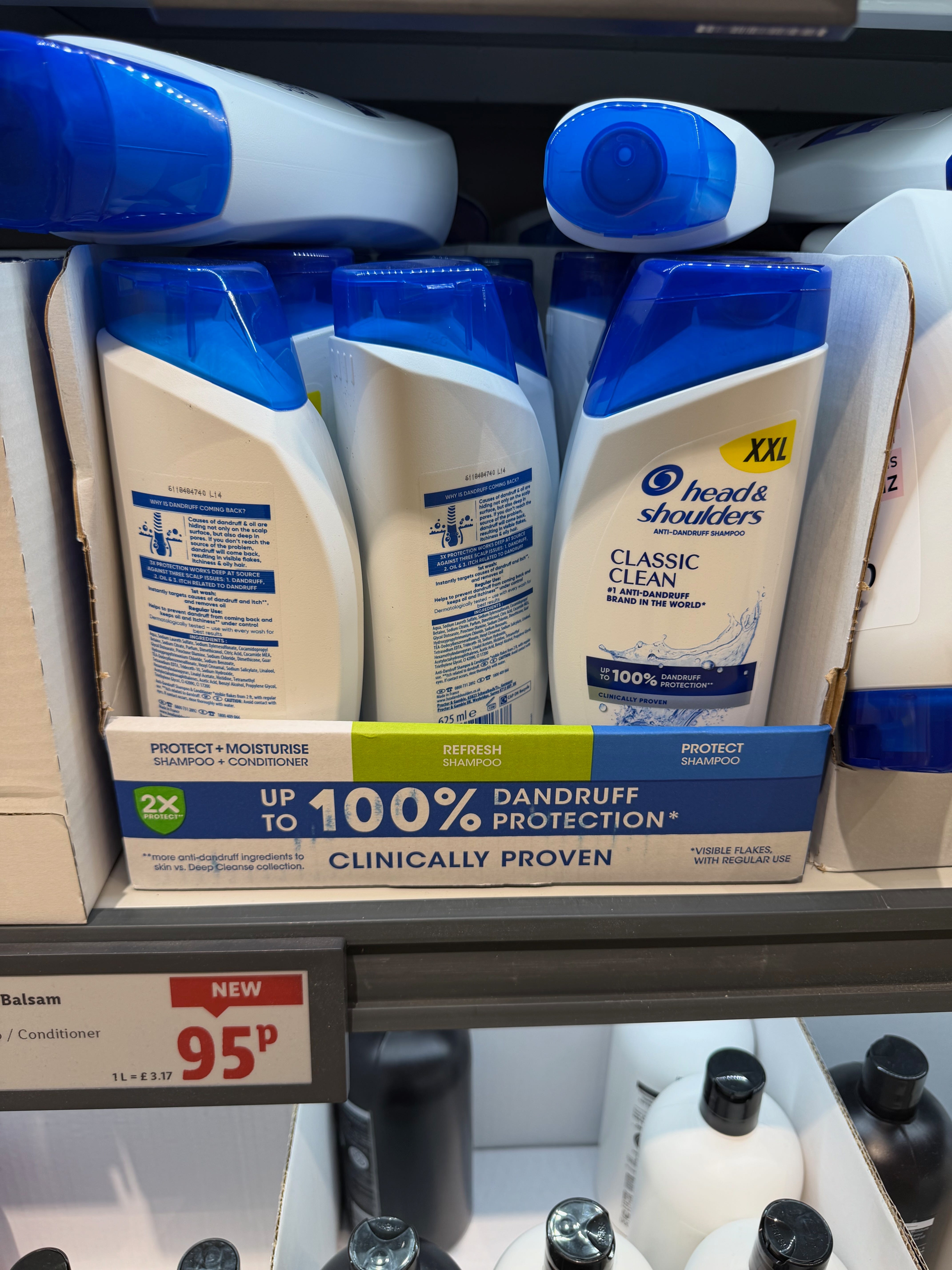
Lidl range more brands
Lidl are happy to hold leading brands permanently in the assortment, both for reassurance and to provide a price comparison against their own label.
Aldi historically ran cleaner, with brands appearing mainly through special buys, although that has softened over the years.
Most notably recently in the UK where brands have appeared in the core assortment, albeit in mixed trays. Aldi have also started to add core brands to their assortment as long as they’re mixed like this (IE one SKU but 3 variants within).
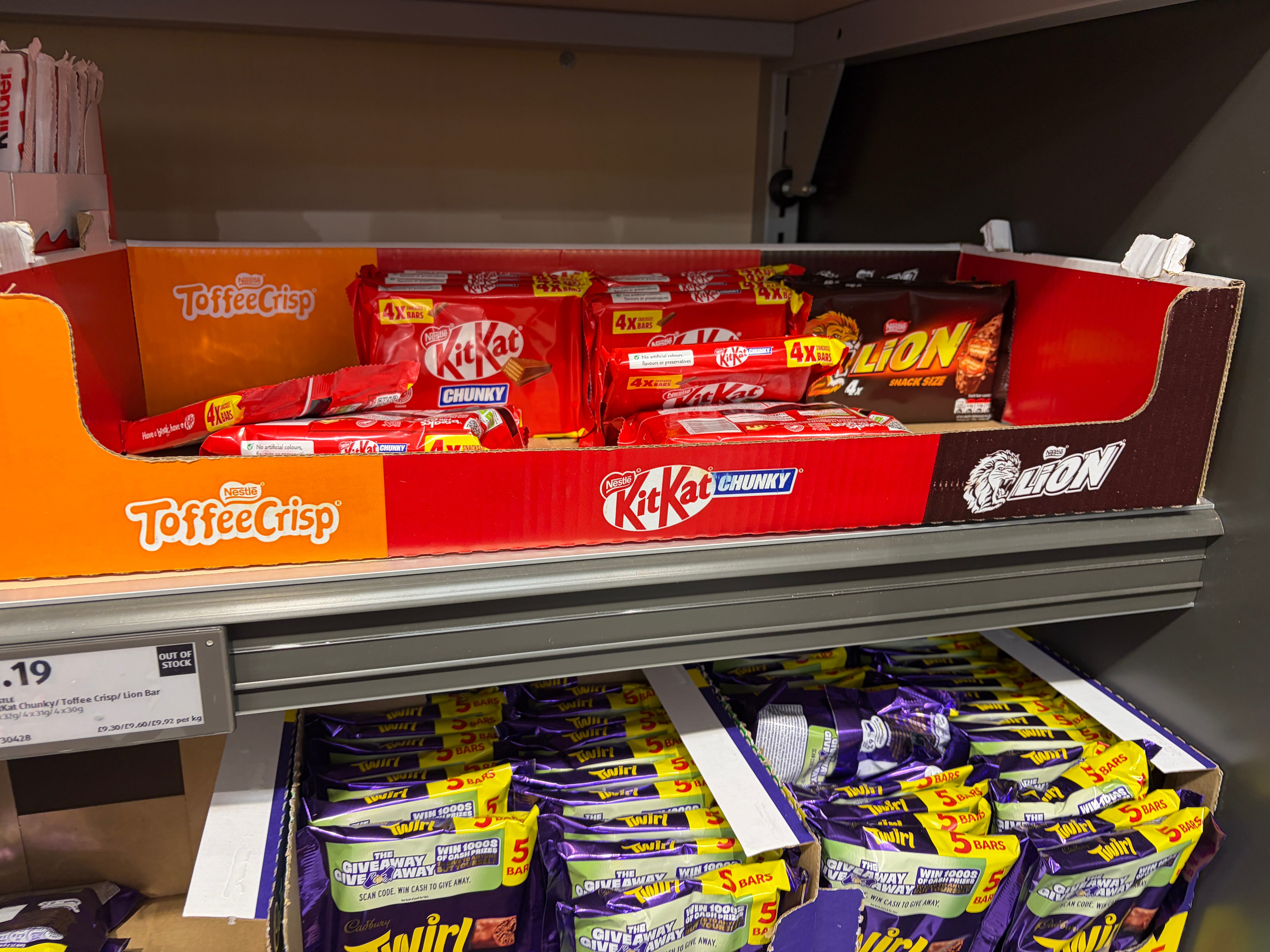
Lidl range more, full stop.
A typical Lidl carries around 10 to 15 per cent more lines than a comparable Aldi in their core range (IE standard shelves) with the stretch mostly in Chilled and core Grocery .
Both Aldi and Lidl special buys carry far more Core Ambient and Beers/Wines, Household etc than they ever did before too, so the core numbers may differ.
But there’s little doubt you can now get a lot more in Aldi (and Lidl) than you could previously when you factor in the near permanent special buy brands.
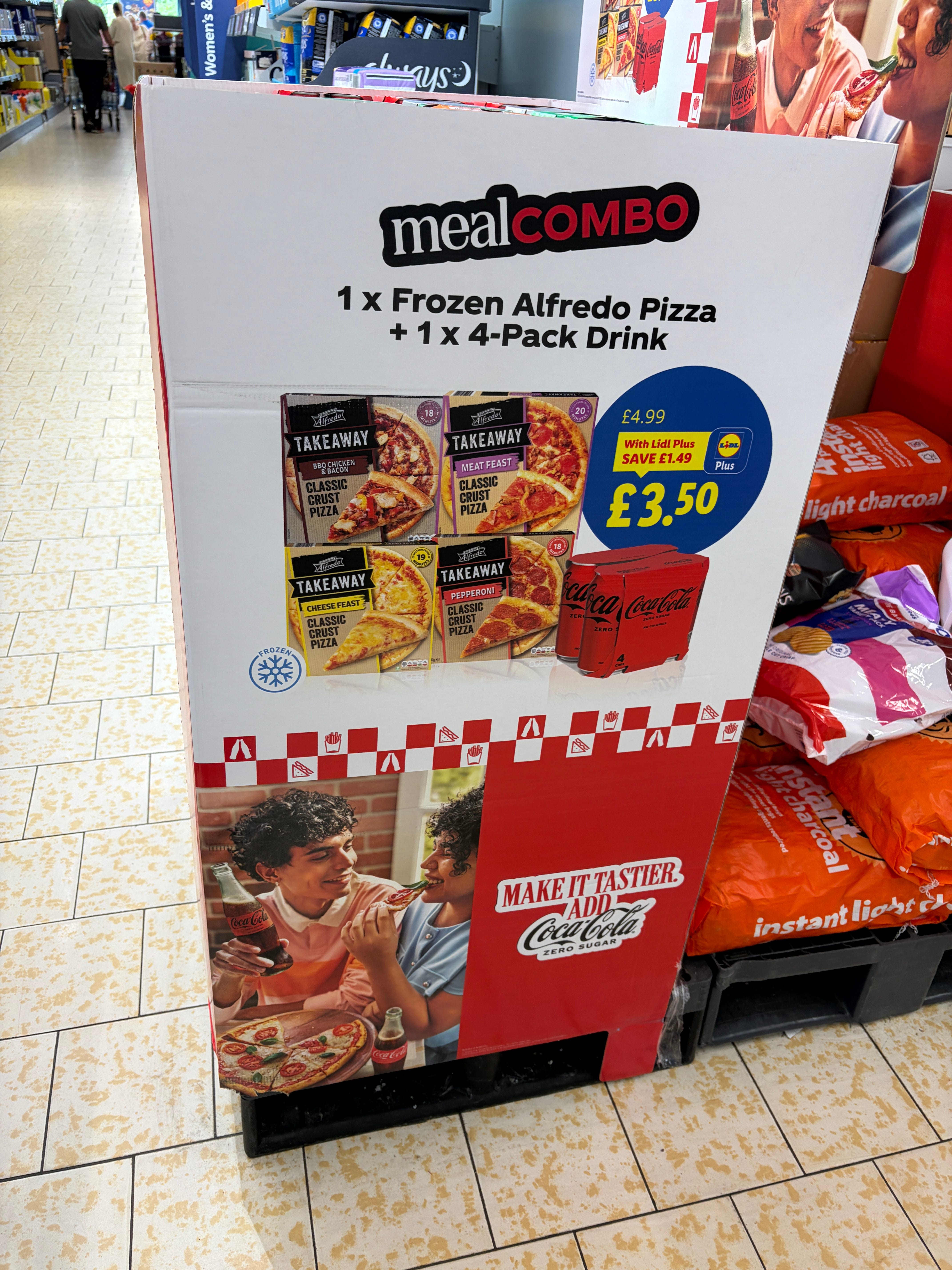
Lidl bake in store.
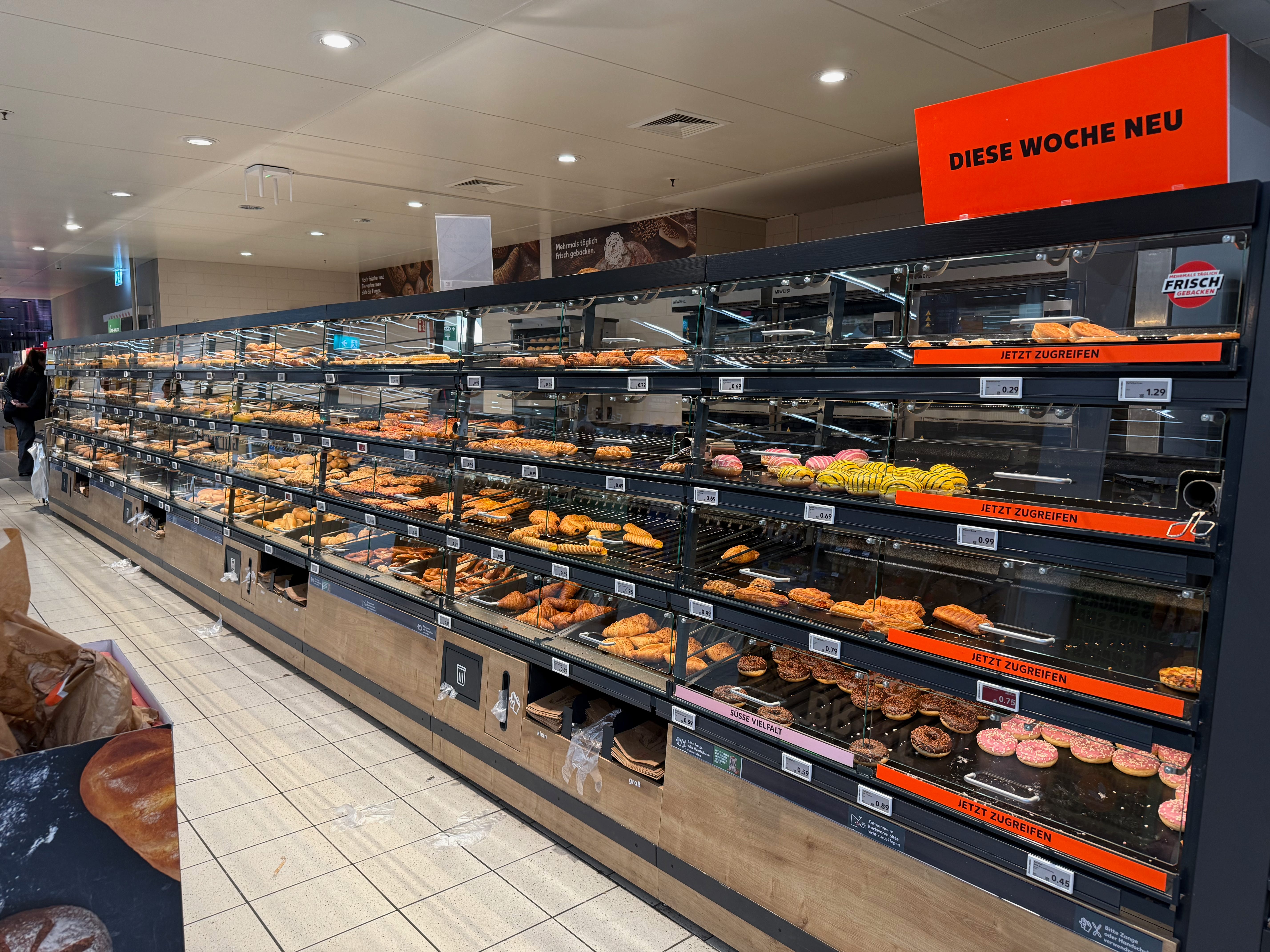
The bake off Bakery, sited at the entrance, is the focal point of most of the Lidl formats. The customer walks in to the sight and smell of Pastries and Breads baked from frozen several times a day, at prices significantly below the wider market.
Aldi trialled in store bakeries and chose not to roll them out; pre packed Bakery does the job in their model without the labour, they continue to tweak around the edges, but stop short of rolling a full Bakery offer.
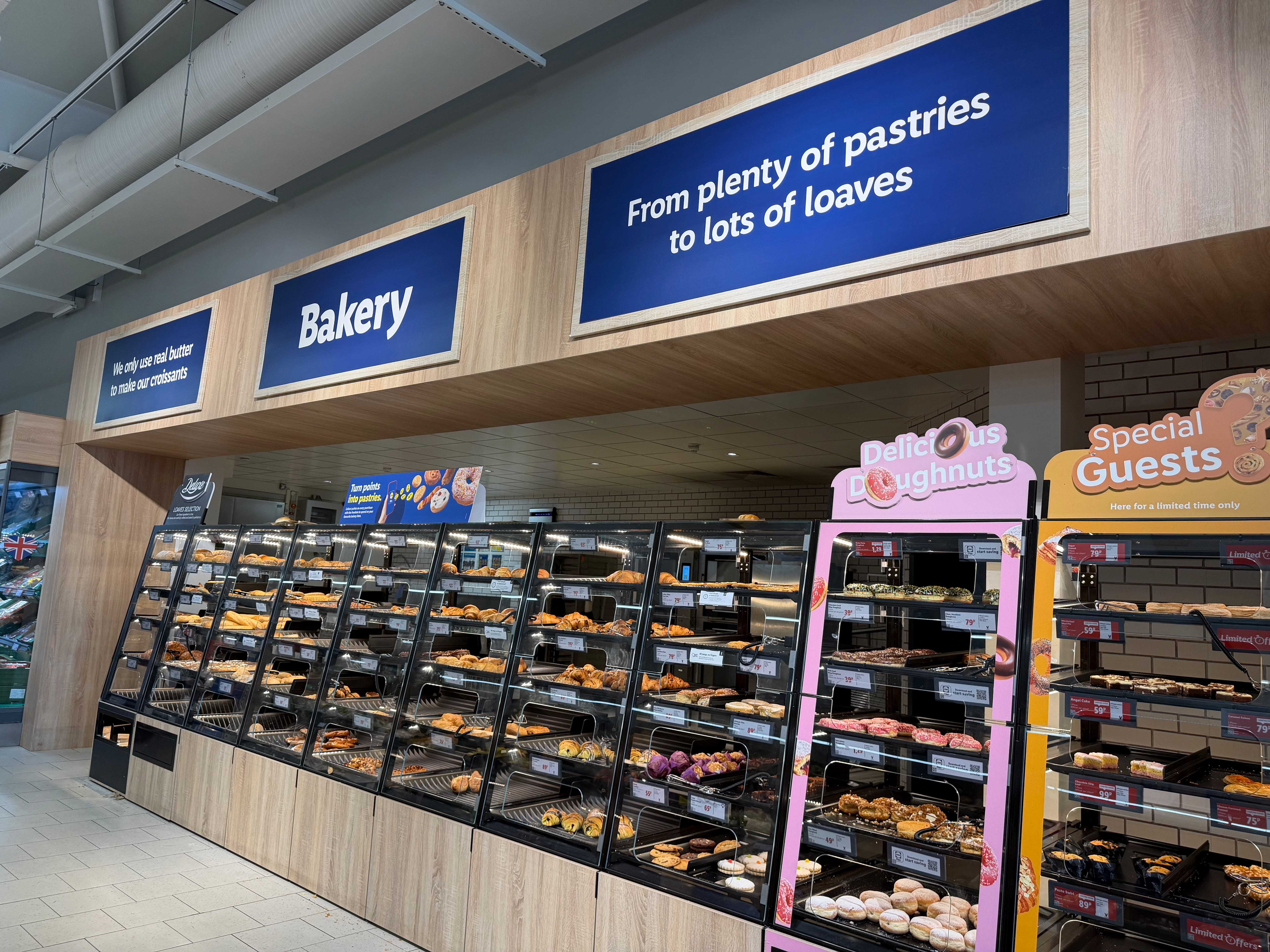
This may explain Lidl’s growth (alongside loyalty) in Numerator/Kantar data, but the Lidl bakery is incredibly popular regardless.
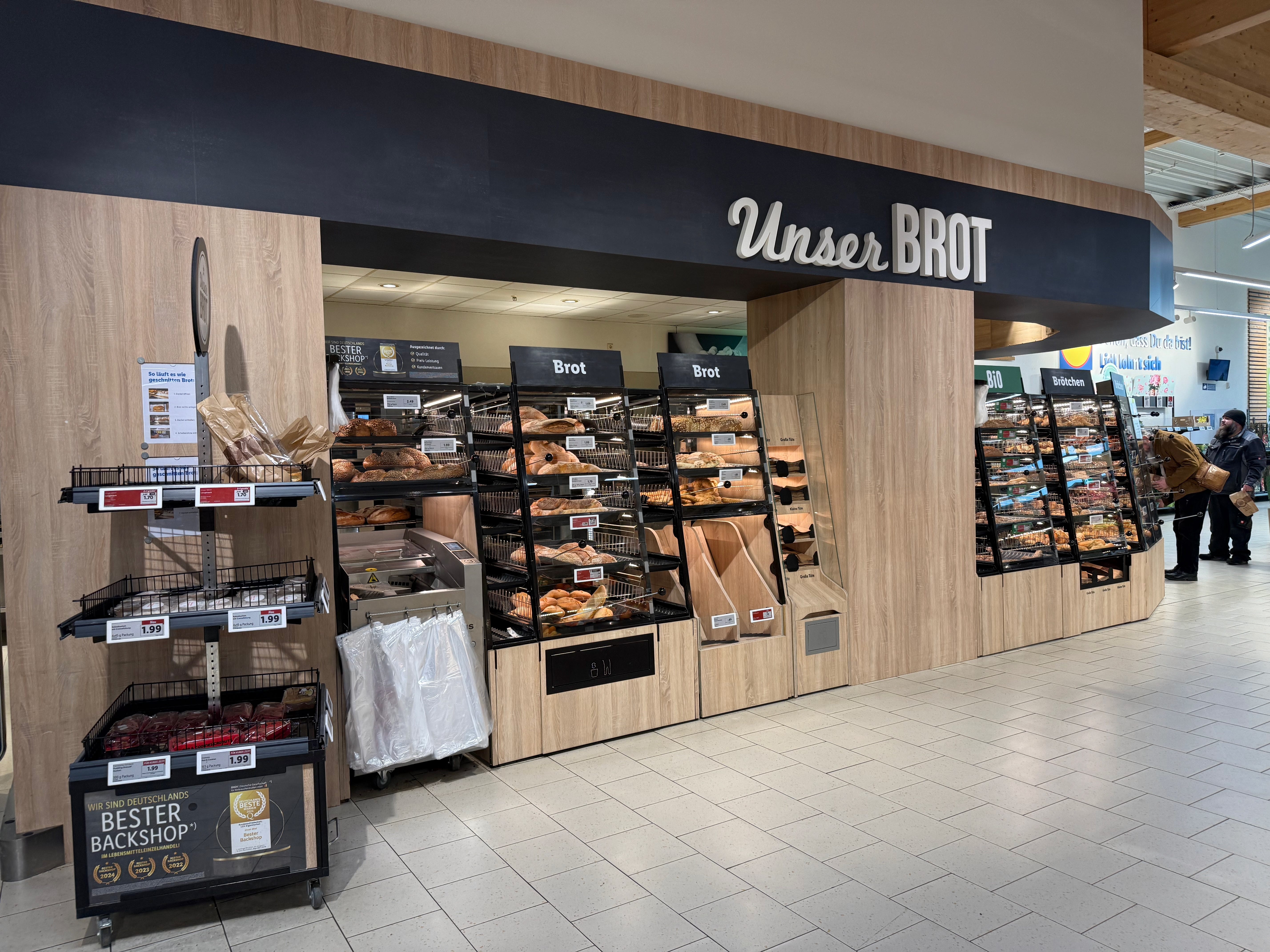
Aldi Nord in Germany (IE) do have a full Bakery, whereas Lidl seem to have them almost everywhere, another marker for the larger, one chain, one model.
Lidl are in loyalty, Aldi are not.
The clearest difference between the two more recently has been the adoption of a loyalty card and associated technologies.
Lidl have Lidl Plus which is phenomenal in its success, bear in mind Lidl are still EDLP (albeit running more promotions than Aldi) but still, their heart is EDLP.
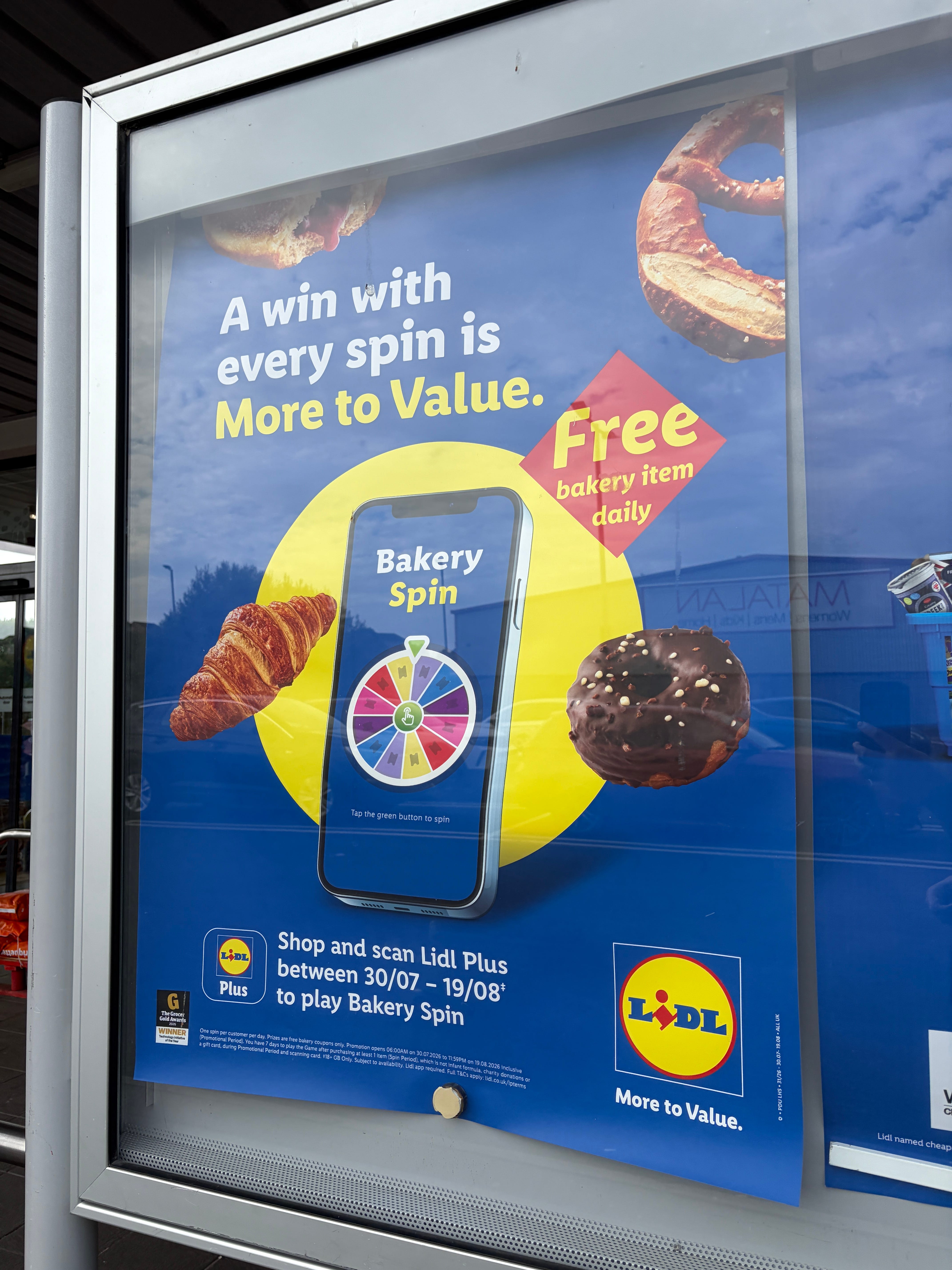
Lidl offer free things to customers with Lidl Plus, alongside points, 5x point multipliers on products. Gamification is a key part of things, alongside (of course) gaining data on customers and their buying habits.
Alongside this - it makes it far easier to stretch spending with customers by offering £5 off £50 etc via the app on a targeted basis. We never see the depth of this (as wider market analysts) so it’s hard to grasp how big the additional discounts are.
But it’s far easier to be hyper personalised with a loyalty app like this.
Then there are Lidl Plus deals (IE Save £x or similar for Lidl Plus customers) and also enabling loyalty customers to use Scan & Shop (via the app) and also join a waitlist for hard to buy robot lawnmowers too.
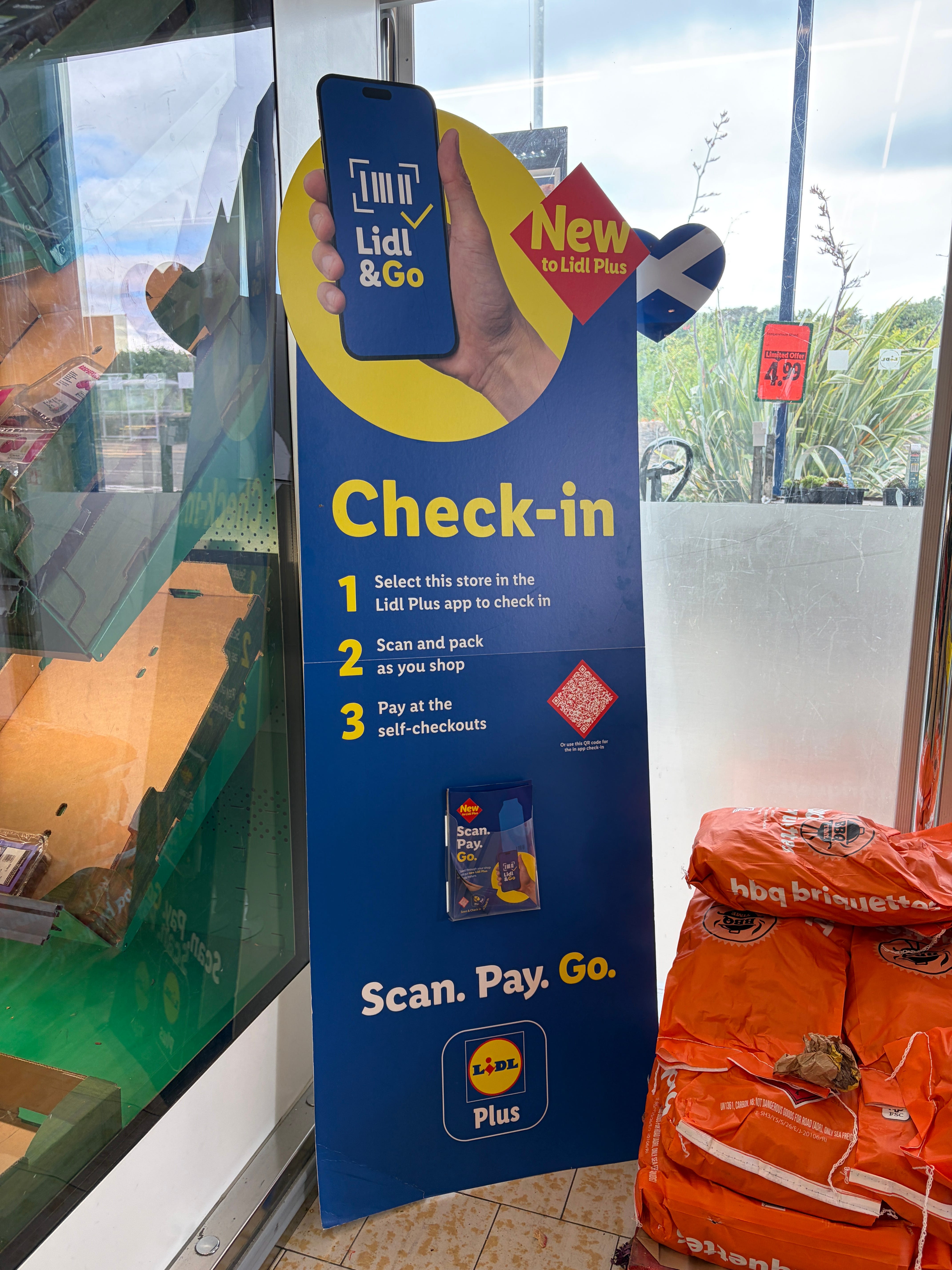
There are many benefits to being a Lidl Plus customer, beyond just some lower prices and deals, for sure.
They have made being in the scheme popular and use extensive gamification and rewards to keep customers interested, alongside the core money off.
Spin to win being a favoured “game” they use.
Lidl are generally more flexible on property.
Lidl have historically been happier to take awkward sites, the basement of an apartment block near a university in Ireland, for example, and are as willing to close a store for six to nine months and rebuild it entirely as to retrofit.
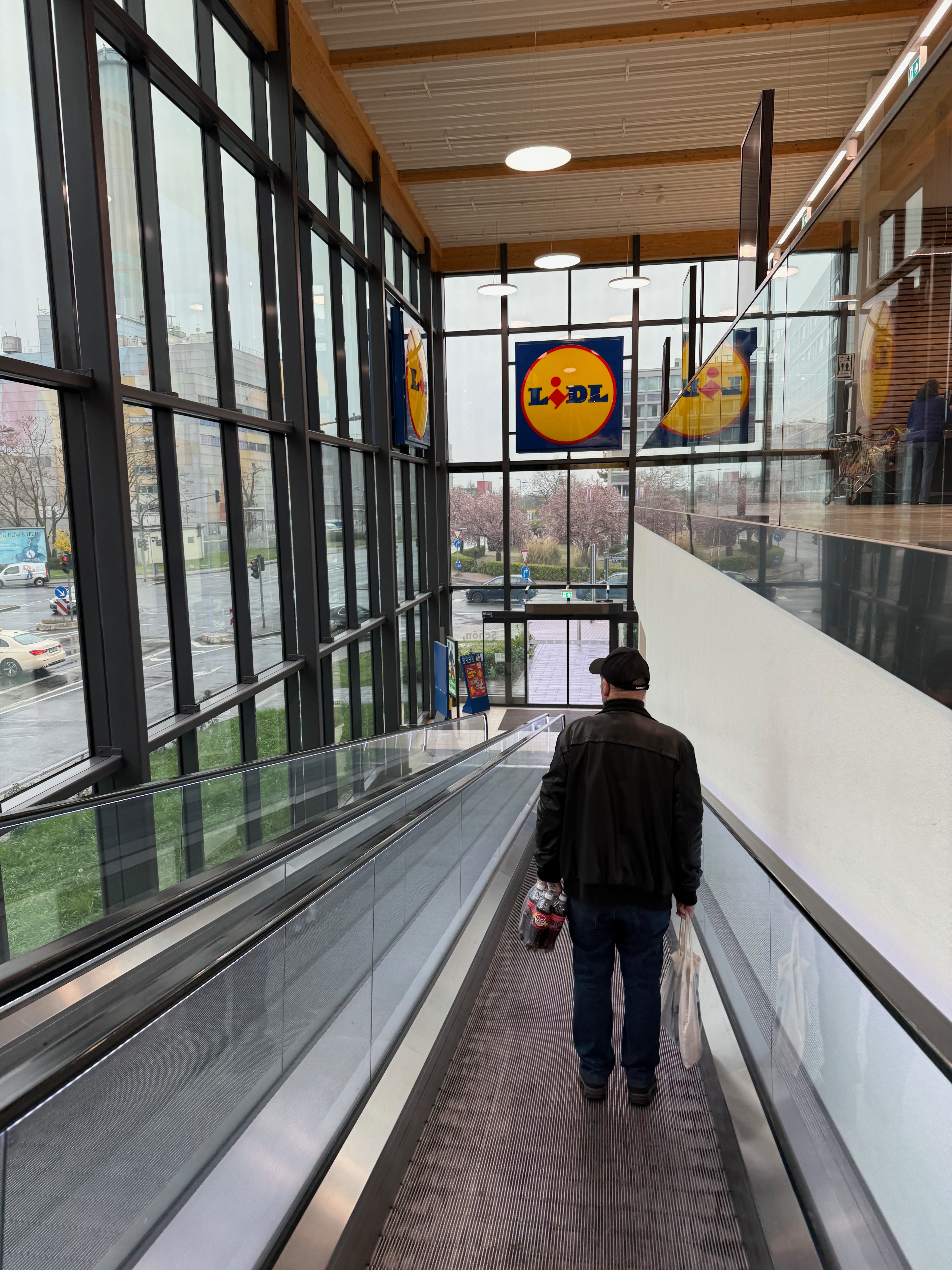
Aldi have run their own format trials, but their estate is more uniform, there is an Aldi Local format in London but this trial hasn’t gone any further as of yet.
Whereas Lidl will open up all over, running smaller stores alongside their larger preferred formats.
Perhaps this is related to their beginnings in London, where you have to be flexible on property and locations.
The “store of the future” arms race
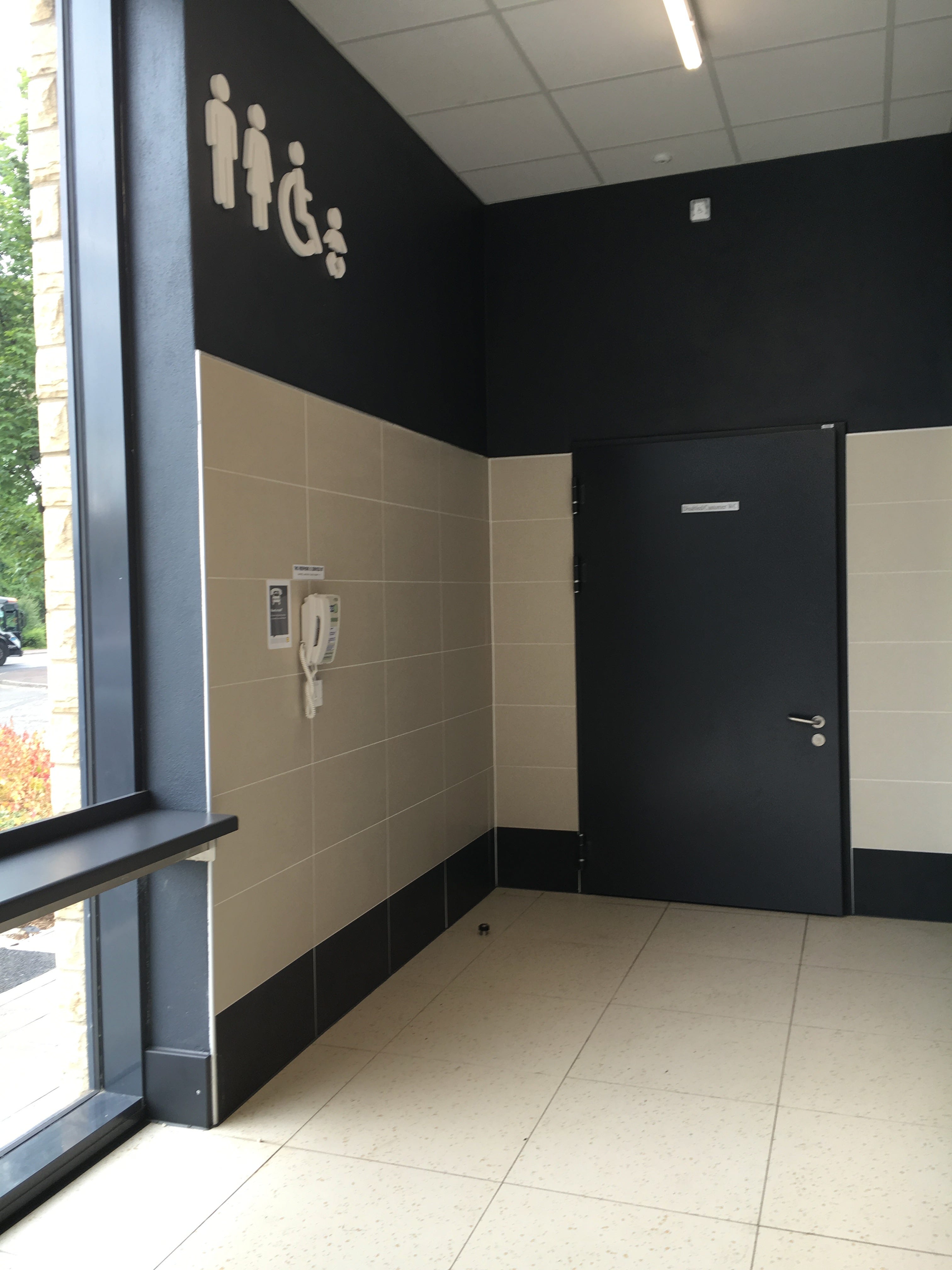
Both chains fuelled their UK and Irish growth from the mid 2010s with “store of the future” formats. Moving away from the austere environments to warmer signage, softer perimeter colours, more space for fresh food, modernised exteriors, and in Lidl’s case the Bakery by the door, self checkouts in and customer toilets too.
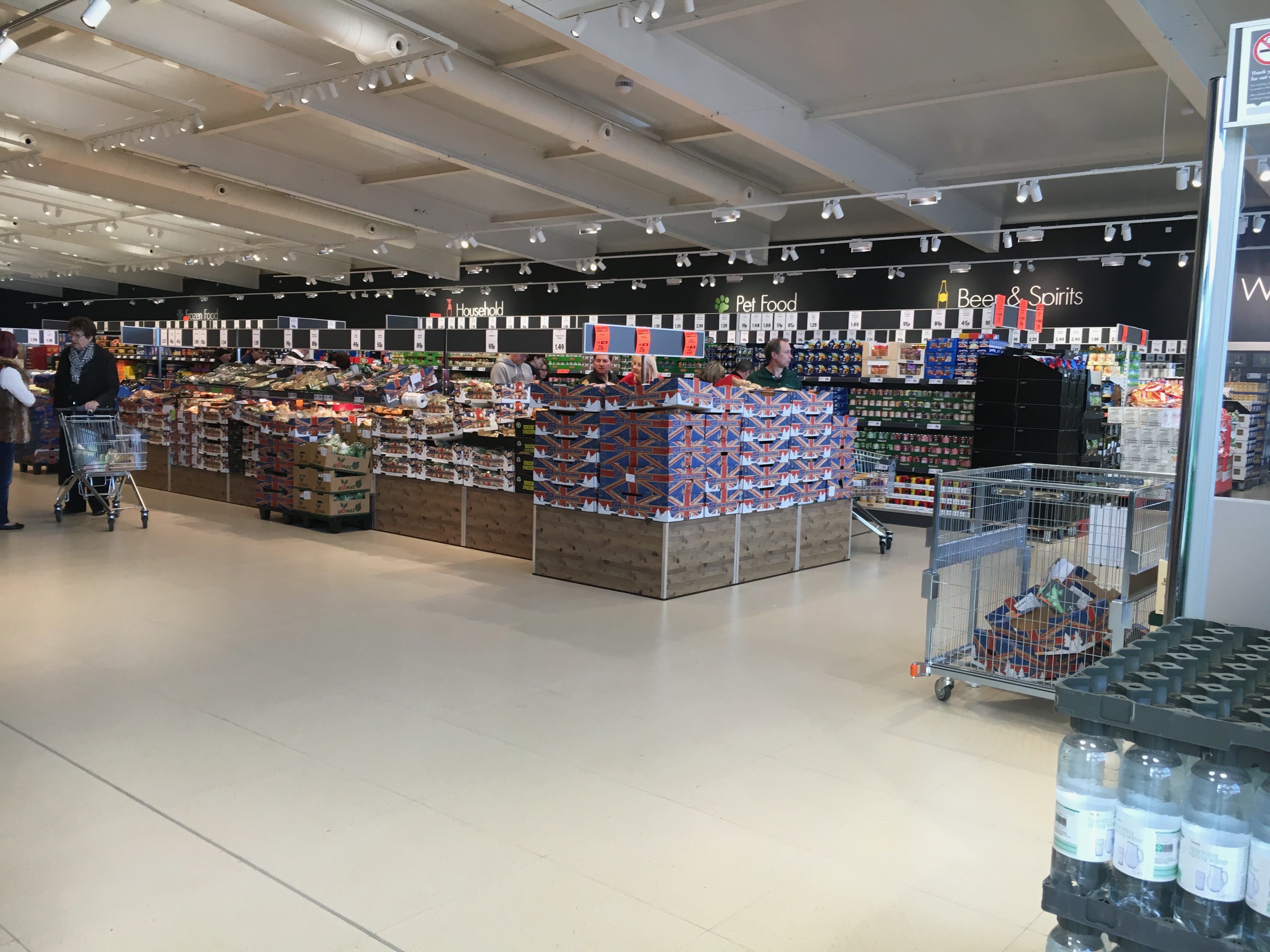
This mattered more than it sounds, before, stores were austere, too small for the trade and were in some cases, actually harming the efficiency of the model, such was their growth in Fresh Foods.
The store environment was the last remaining reason for a middle class customer not to switch. Once the stores were larger, more modern, with a bigger car park and easier to get around, then the product, price and service did the rest.
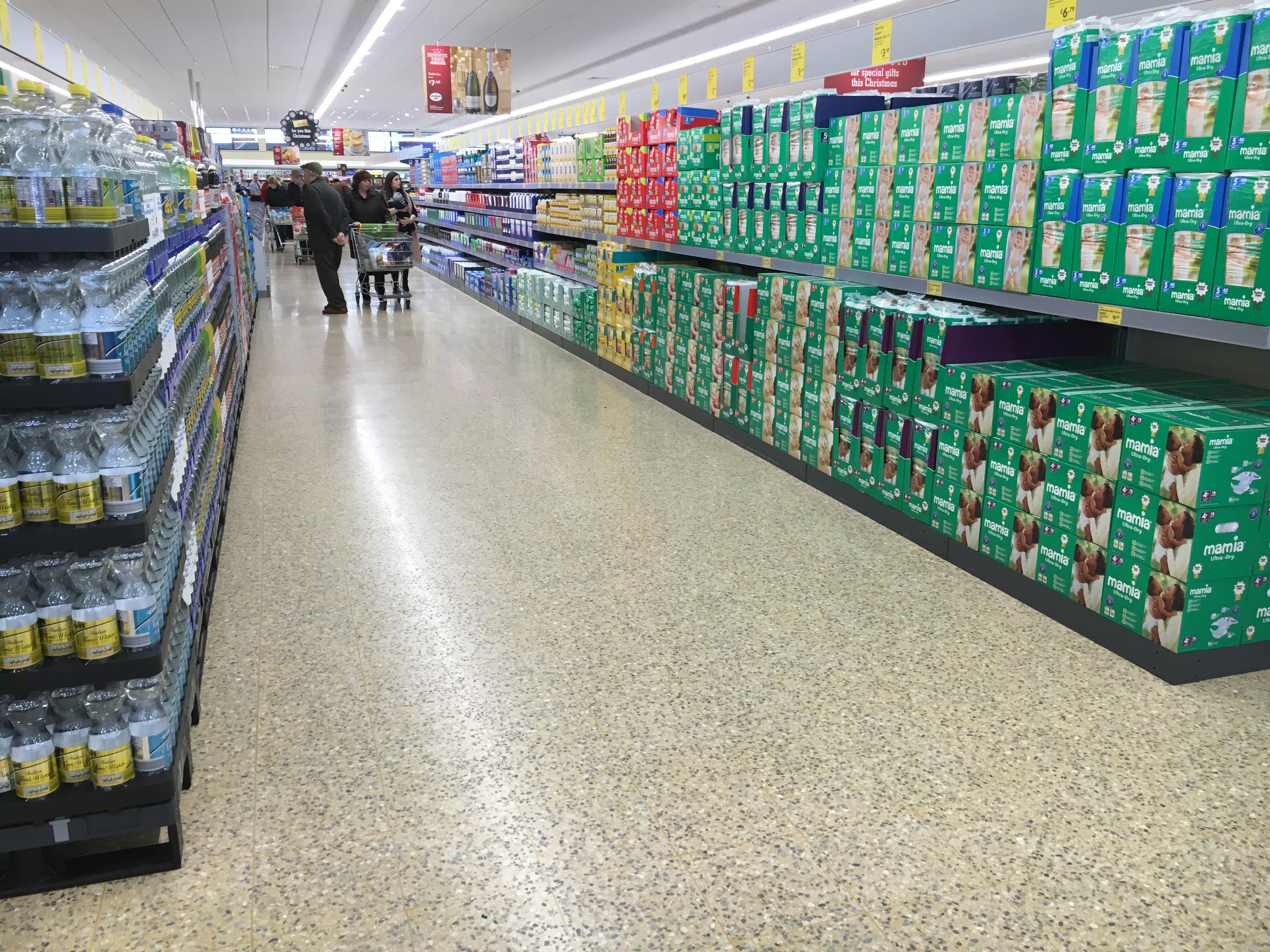
The refit programmes rolled backwards through both estates as fast as capital allowed… Stores were rebuilt, or moved to a better location nearby.
The refit an expansion programme was capital intensive but due to both chain’s approach and private ownership, it made things far easier.
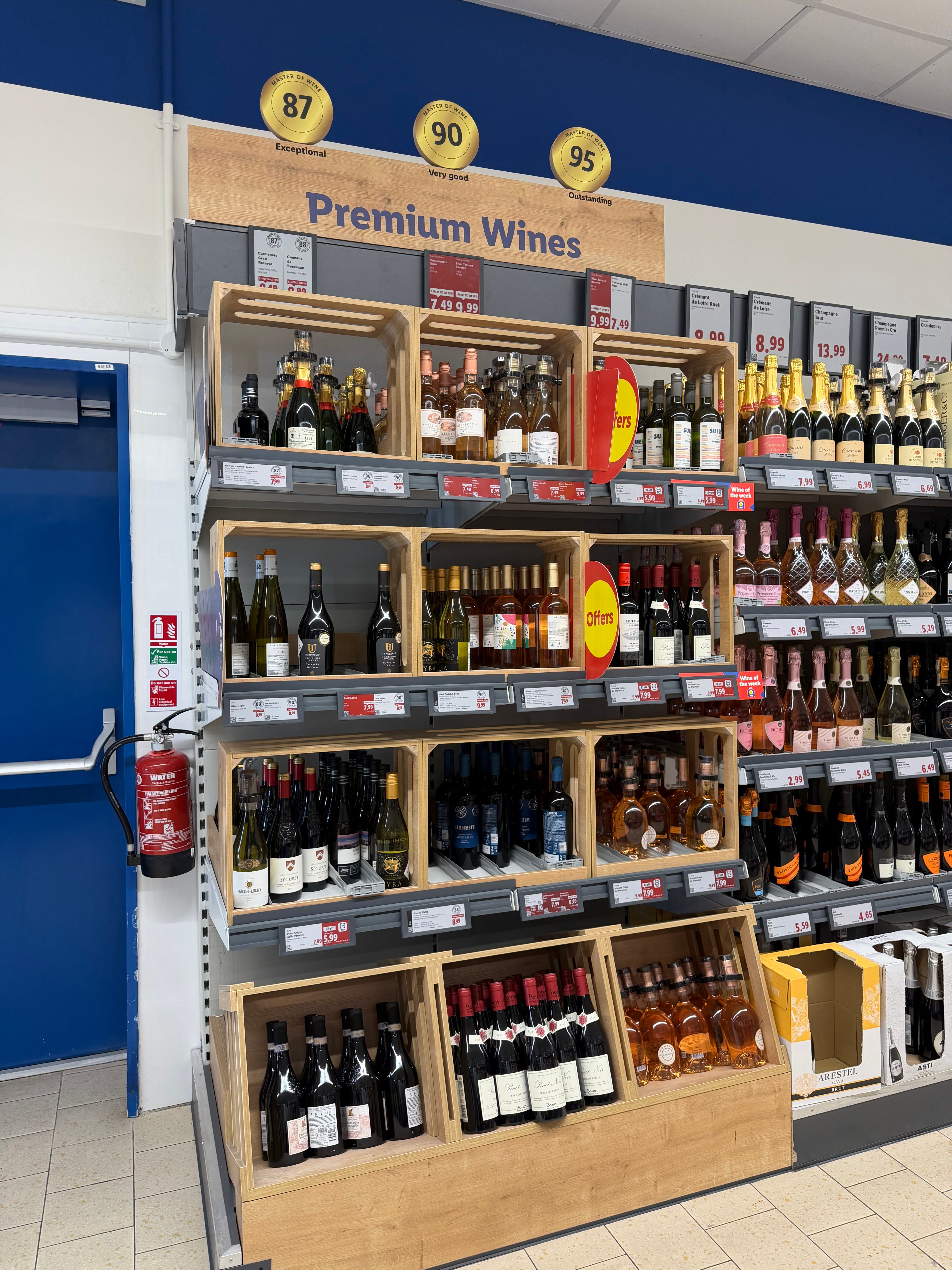
Aldi responded to Lidl’s format with their own pilot; stronger signage, a new aisle flow, and a focus on Baby, Cosmetics and Fine Wines, and rolled it across the UK. Again, the key focus was the size of the store, moving out of their core footprint in to a larger size to accommodate more facings for the faster moving trade and larger car parks and the like.
Neither chain lets the other’s format sit unanswered for long. That, too, is part of the story: the sharpest competitive tension in UK food retail for a decade has arguably been between the two discounters themselves.
Lidl’s own identity, in summary
Pulling the strategic differences together, Lidl’s identity within discount comes down to:
More brands, held permanently, and compared openly against own label with the core brands added without a one sku / three variants necessarily.
A slightly larger range, 10 to 15 per cent over Aldi, weighted to chilled and ambient with depth of choice - IE brands.
The in store Bakery as the fresh food halo.
More promotional in store marketing, including more multibuys and Super Weekend / XXL deals inside an EDLP framework.
Charity and sourcing partnerships chosen for credibility: national accreditation schemes, recognised charity partners, sponsorships that put the brand next to trusted institutions. Lidl tend to sponsor European Football, for example.
Aldi, by contrast, are similar but have a tighter range, less frills (IE No Bakery or loyalty) and fewer promotions versus Lidl across the store.
But both are flexible in their approach.
The so what
If you are a larger retailer, the lesson is that you are not defending against one playbook but two.
Aldi will always beat you on cost discipline and price perception; Lidl beat you on theatre, freshness cues, value in your face and the customer champion halo.
A defence tuned to one, gives share to the other. They need to be fought on all fronts and the easiest way to do this, is to focus on your own operation and the unique elements of this.
Not trying to out Aldi, Aldi. Or out Lidl, Lidl.
If you are a supplier, then the two need approaching differently too: Lidl’s permanent brand and the mixed case opportunities (once the chain reaches maturity in the territory) and promotional special buys offer a route in that Aldi’s cleaner model mostly does not. However that is starting to change, albeit slowly.
Part 3 goes inside the own label architecture itself, the value, core and premium tiers, because that is where the discounter margin actually lives, and it is the part of the model the larger retailers found hardest to copy.
Also crucially, we can start to see where the UK grocers got it wrong, then where they got it right and started to use the discounter model against the discounters and how that growth has been slowed in the UK market.